Tart cranberries and fresh orange give these muffins a bright flavor that works well for a portable breakfast or an afternoon snack. Whole-wheat flour adds whole grains, while a measured amount of sweetener keeps the muffins pleasantly balanced.
Use fresh or frozen cranberries, depending on what you have. The simple ingredient choices make these muffins a wholesome option for breakfast or snacks, and the recipe details below will help you get started.
Healthy Cranberry Orange Muffins for Breakfast or Snacks
These muffins make a handy breakfast or snack, with a tender crumb, hearty whole-wheat flour, and bright orange flavor. The recipe makes about 12 muffins, so you can enjoy some warm and save the rest for later.

The simple ingredients that give each muffin its flavor
Yield: 12 muffins
Prep time: 15 minutes
Bake time: 18 to 22 minutes
Oven: 375°F
For one batch, gather:
- 1 ½ cups whole-wheat flour
- 1 teaspoon baking powder
- ½ teaspoon baking soda
- ¼ teaspoon salt
- 2 large eggs
- ⅓ cup neutral oil or melted butter
- ⅓ cup plain yogurt
- ⅓ cup maple syrup or honey
- ¼ cup orange juice
- 1 tablespoon finely grated orange zest
- 1 cup fresh or frozen cranberries, chopped
Whole-wheat flour gives the muffins a slightly hearty texture and more substantial bite than all-purpose flour alone. Orange zest carries much of the fruit’s fragrant citrus aroma, while orange juice adds a softer citrus note and moisture to the batter. Cranberries bring the tart contrast that keeps each bite from tasting too sweet.
Maple syrup and honey work well as sweeteners, but they still contain sugars. The FDA explains how added sugars are declared for pure honey and maple syrup on food labels in its guidance on honey and maple syrup labeling. Use a modest amount and choose the sweetener you prefer.
Fresh or frozen cranberries both work
For fresh cranberries, rinse them under cool water and pat them dry before chopping. Cut them into small pieces so the tart fruit is spread through the batter instead of landing in a few large, sharp bites.
Frozen cranberries can work, too, but check the recipe’s handling instructions before adding them. Some recipes call for berries straight from the freezer; others may work better with berries partly thawed. If you need to chop them, let them soften just enough to cut safely, then fold them in before they thaw fully. Excess thawing releases juice that can tint the batter pink. Don’t assume every package or recipe needs the same treatment.
How to bake tender cranberry orange muffins
A few small choices make a difference in these whole-wheat muffins. Prepare the pan before mixing, handle the batter gently, and use the center of a muffin to judge when the batch is ready.

Mix the batter gently for a soft crumb
Heat the oven to 425°F and lightly grease a standard 12-cup muffin pan, or line the cups with paper liners. Whisk the whole-wheat flour, baking powder, baking soda, and salt in one bowl. In a second bowl, whisk the eggs, oil or melted butter, yogurt, maple syrup or honey, orange juice, and zest until combined.
Pour the wet ingredients into the dry ingredients. Stir just until the dry flour is incorporated, scraping the bottom of the bowl once if needed. A few small lumps are fine. Mixing until the batter looks completely smooth can make whole-wheat muffins dense, so stop when you no longer see dry flour. King Arthur Baking also recommends avoiding overmixing in its basic muffin recipe.
Fold the chopped cranberries in last, using a few gentle strokes to spread them through the batter. This helps keep the fruit evenly distributed without adding extra mixing. Divide the batter among the muffin cups, aiming for equal portions so the muffins bake at a similar rate.
Use the oven temperature and doneness cues
A high-start bake can help the tops rise early, then finish cooking at a lower temperature. Put the pan in the 425°F oven for 5 minutes, then reduce the heat to 375°F without opening the oven door. Continue baking until the centers are set. Oven accuracy, pan material, and portion size can all affect timing, so use the recipe’s time as a guide rather than a guarantee.
Near the end of baking, insert a toothpick into the center of a muffin. A few moist crumbs are fine; wet batter means it needs more time. Check another muffin if the first one still seems underdone, then return the pan to the oven for a few minutes before testing again. Tops can look ready before the centers finish, so the toothpick gives you a more useful cue than color alone.
When the muffins are done, let them rest in the pan for about 5 minutes. Then transfer them to a cooling rack. That brief pause helps the tender muffins hold their shape as you lift them out.
Easy ways to adjust the recipe to your taste
Small changes can shift the flavor and texture of these cranberry orange muffins. Adjust one ingredient at a time, since flour, liquid, and add-ins don’t always swap evenly.

Make them more whole grain or less sweet
The recipe uses whole-wheat flour, which gives the muffins a heartier bite. Whole-wheat flour also retains the grain’s bran and germ, which contain fiber and other nutrients, as described in the USDA’s research on whole-grain wheat flour. For a milder wheat flavor and lighter color, use white whole-wheat flour. It’s still whole grain, but its flavor is less pronounced.
If you’d like a softer, less hearty crumb, replace up to half the whole-wheat flour with all-purpose flour. Avoid changing the flour and liquid amounts at the same time. Different flours absorb moisture differently, so check the batter before adding anything extra.
For less sweetness, reduce the maple syrup or honey by a tablespoon or two. The cranberries will taste tarter, and the muffins may be a little less moist. Make a modest reduction first, then adjust the next batch if you prefer less sweetness. Honey and maple syrup still contain sugar, so they aren’t sugar-free alternatives.
Add nuts, spices, or other fruit carefully
Chopped walnuts or pecans add a pleasant crunch. Start with about ¼ cup, or add ¼ teaspoon cinnamon for a warmer flavor. A little extra orange zest can make the citrus note brighter without changing the batter much.
Keep wet fruit and bulky mix-ins modest. Too much extra fruit can release moisture, while a large amount of nuts or other additions can weigh down the crumb. Either change may affect the baking time, so check the centers with a toothpick and look for a few moist crumbs rather than relying only on the timer.
If you’re sharing the muffins, check with guests about nut allergies before adding walnuts or pecans. You can also leave nuts out and serve them on the side.
Serve, store, and freeze muffins for easy meals
These cranberry orange muffins are easy to fit into a breakfast or snack routine. Pair one with a simple side, then store the extras so you have a quick option ready for another day.
Pair a muffin with a filling breakfast or snack
Serve a muffin with plain yogurt and fresh fruit for a simple breakfast. Nut butter is another easy pairing, spread on a muffin or served on the side. Use what you have, such as berries, sliced apples, or a banana.
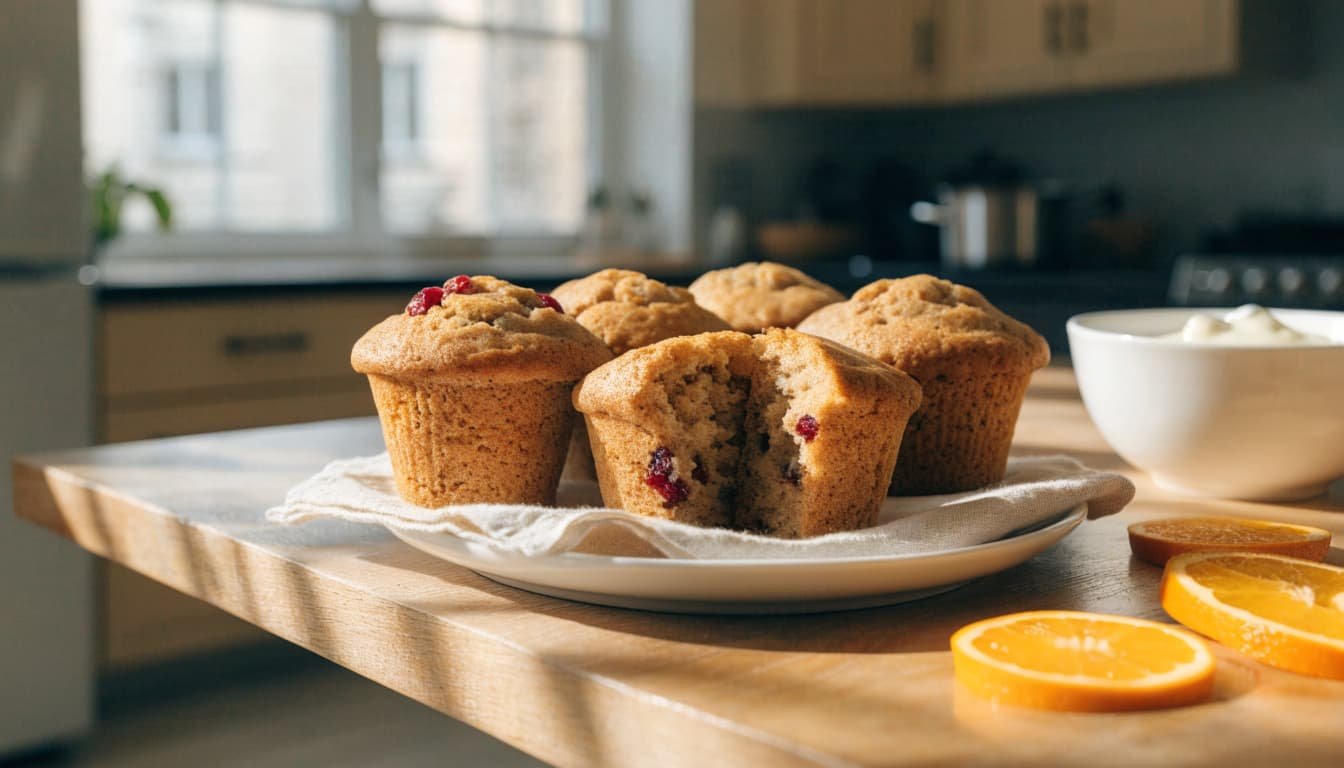
A muffin also packs well for a midmorning or afternoon snack. Add it to a lunch bag with a piece of fruit, or keep one ready for the trip home. If you pack yogurt or another food that needs to stay cold, use an insulated bag with a cold pack.
Keep leftovers fresh and freeze extras
Let muffins cool completely before packing them. Warm muffins can release steam inside a container, which may soften the tops and make the crumb damp. Store them in an airtight container, and keep the container in a cool, dry spot.
Refrigeration can help limit mold, especially in warm or humid conditions, though it may make muffins stale sooner. If you refrigerate them, use a covered container and take out only what you plan to eat. Storage recommendations differ: Virginia Cooperative Extension lists 7 to 10 days for prepared cakes and muffins in the refrigerator, while other published guidance uses different windows. Treat these as storage guidance, not a guarantee that every muffin will stay fresh that long. Discard any muffin that shows mold.
For longer storage, freeze the cooled muffins in a freezer-safe bag or container. Label the date, and wrap muffins individually if you’d like to thaw one at a time. Extension recommendations for frozen muffins vary, so use a practical quality window rather than treating one date as universal. Frozen muffins can lose some freshness or tenderness, but they’re still convenient to keep on hand. The USDA’s freezing and food safety guidance explains how freezing affects food quality and safe handling.
Thaw a muffin at room temperature while wrapped, or warm one from frozen in the microwave in short intervals. You can also heat it in a 300°F oven until warmed through. Reheat only what you need, since repeated warming can dry out the crumb.
Fix common problems before the next batch
A batch that turns out dry, dense, or more tart than you expected usually needs only one small adjustment. Look at the crumb and taste before changing the recipe, then adjust the next batch rather than making several changes at once.
What to do if muffins turn out dry, dense, or too tart

Dry muffins can come from too much flour or too much time in the oven. Spoon flour lightly into the measuring cup and level it off instead of scooping straight from the bag, which can pack in extra. If you use a scale and the recipe provides a weight, measure by weight. King Arthur Baking’s flour measuring guide shows both approaches.
A dense or tough crumb often means the batter was mixed too much after adding the flour. Stir just until the dry flour disappears, then fold in the cranberries gently. A few small lumps are fine. For the next batch, keep the mixing brief and check a muffin near the early end of the baking time. Overbaking can dry the crumb even when the batter was mixed properly.
If the centers seem underbaked, return the pan to the oven for a few minutes and check again. Insert a toothpick into the center of a muffin. Wet batter means it needs more time; a few moist crumbs are fine. The pan, oven, and amount of batter in each well can affect timing, so judge the center rather than relying only on the tops’ color or the timer.
Cranberries can make these muffins taste sharply tart, especially if you prefer a sweeter breakfast. Serve one with plain yogurt to soften the contrast, or add a small amount of sweetener, about a tablespoon, to the next batch. Make one adjustment first, then taste again. That way, you can keep the bright cranberry-orange flavor without making the muffins sweeter than you like.
Conclusion
These healthy cranberry orange muffins pair bright citrus with tart berries and the hearty texture of whole-wheat flour. Fresh or frozen cranberries both work, so use what you have and follow the recipe’s directions for preparing them.
Enjoy a muffin for breakfast or pack one as a snack. If you change the recipe, try one small variation at a time so you can keep the balance of flavors and texture you like.

- Christmas Cookie Ideas for Every Holiday Baker - November 9, 2026
- Christmas Cocktails: Party Drinks, Cozy Sips, and Mocktails - November 9, 2026
- 20 Christmas Appetizer Ideas for Every Holiday Spread - November 9, 2026