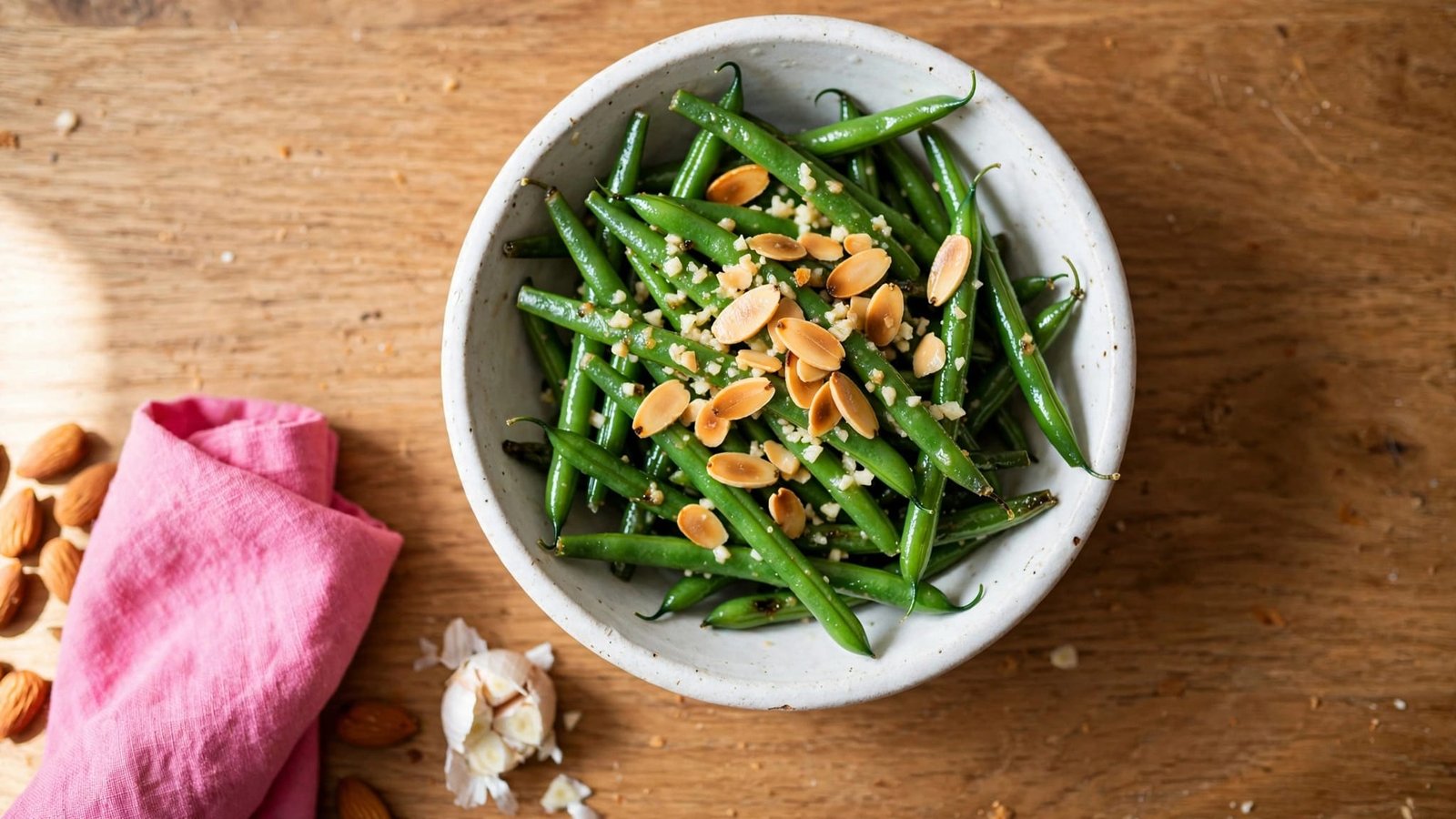
When the evening is full, a filling dinner with protein and vegetables on one pan can make cooking and cleanup easier. Sheet-pan sausage with green beans and potatoes brings savory sausage, tender vegetables, and simple seasonings together in a meal you can adjust to what you have.
Use your preferred fully cooked sausage, and cut the potatoes into evenly sized pieces so they roast at a similar pace. The recipe offers two roasting methods, with practical timing to help you choose whether to add the green beans at the start or later. Start with the ingredients and pick the method that fits your evening.
Why Sheet-Pan Sausage with Green Beans and Potatoes Works for Weeknights
This dinner uses familiar ingredients, needs only a little prep, and keeps most of the cooking on one pan. The two roasting methods give you room to adjust for potato size, so you can choose the approach that fits your evening.
A balanced dinner from one pan
Sausage brings protein and savory flavor, while potatoes make the meal hearty enough to serve as dinner. Green beans add color and a vegetable without requiring a separate side dish. Cut the ingredients, season them simply, and let the oven do most of the work.
Cleanup stays manageable, too. A sheet pan lined with parchment is easy to clear, and there’s no need to juggle several pots while dinner cooks. Serve the pan as it is, or add a simple side or topping if you feel like it. A green salad, a little mustard, or fresh herbs can be nice, but none is required.

How long to plan for
For an all-at-once method, plan on about 20 to 25 minutes at 425°F when the potatoes are cut into small, evenly sized pieces. The exact time can shift with the size of the pieces, how crowded the pan is, and how your oven runs, so check that the potatoes are tender before serving.
Larger potato pieces need more time than green beans and sausage. Give the potatoes a head start, then add the quicker-cooking ingredients so everything finishes together. That extra step adds oven time, but it helps prevent crisp-tender green beans from sitting in the heat while the potatoes catch up.
Both methods keep prep straightforward: use what you have, cut the vegetables to suit the timing, and avoid crowding the pan so the ingredients roast instead of steam. If you use raw sausage, check its center with a food thermometer and follow FoodSafety.gov’s safe temperature chart.
Choose the Right Sausage, Potatoes, and Green Beans
Choose ingredients that suit your table and the time you have. For about four servings, start with the amounts below and adjust them to your appetite or what’s in the fridge.

- 1 pound sausage, sliced if fully cooked
- 1 1/2 pounds small potatoes, or larger potatoes cut into bite-size pieces
- 12 ounces fresh green beans
- 1 to 2 tablespoons olive oil
- 2 garlic cloves, minced, or a little garlic powder
- 1 teaspoon dried thyme, oregano, or rosemary
- Black pepper, to taste
- Salt, added lightly at first
- Smoked paprika and lemon, optional
Pick a sausage that fits your table
Smoked kielbasa and other fully cooked sausages mainly need to heat through and brown. They’re convenient for this sheet-pan meal, and you can slice them before roasting. Fresh pork or beef sausage has a softer texture and needs to cook through. Poultry sausage is another option; check the package to see whether it’s fully cooked or raw.
For raw sausage, use a food thermometer to check the center. Fresh pork and beef sausage should reach 160°F, while poultry sausage should reach 165°F. See FoodSafety.gov’s safe temperature chart for these and other cooking temperatures.
Sausage can bring plenty of salt to the pan, and the amount varies by brand and type. Season the vegetables lightly at first, then taste before adding more.
Cut potatoes evenly and prep the beans
Small or waxy potatoes are easy to prepare and hold their shape well. If you’re using larger potatoes, cut them into similar-sized pieces so they soften at about the same pace. Uniform pieces help the pan cook on schedule, whether you roast everything together or give the potatoes a head start.
Trim the ends from fresh green beans, rinse them, and dry them well. Surface moisture can make vegetables steam instead of brown. Keep the pieces close in size, and spread everything in a single layer on the pan so the ingredients have room to roast.
Simple oil, herbs, and seasonings
Toss the potatoes and beans with a modest amount of olive oil, enough to coat them lightly. Add black pepper, minced garlic, and one dried herb you enjoy. Thyme, oregano, and rosemary all work; there’s no need to use all three.
For a deeper savory note, add a pinch of smoked paprika. Keep the seasoning flexible, especially when the sausage is already salty or strongly flavored. A squeeze of lemon over the finished pan can brighten the richer ingredients.
How to Make Sheet-Pan Sausage with Green Beans and Potatoes
For about four servings, choose the quick all-at-once method when you can cut the potatoes into small pieces. If you want larger potato pieces or green beans with a little more bite, use the staged method instead. Both work best when the ingredients have room on the pan and you check them as they cook.
Arrange everything for even browning
For the quick method, heat the oven to 425°F. Cut the potatoes into small, evenly sized pieces so they have time to soften alongside the green beans and sausage. Toss the potatoes and trimmed, dried beans with olive oil, garlic, herbs, and pepper. Add sliced fully cooked sausage, or whole fresh sausage links, and coat the ingredients lightly with oil and seasoning.
Spread everything in a single layer on a rimmed sheet pan. A little space between the pieces helps hot air move around them. When the pan is crowded, moisture collects and the ingredients can steam instead of brown. Roast for about 20 to 25 minutes, checking the potatoes for tenderness as they cook. If the pieces are larger, choose the staged method rather than expecting them to soften in the same time.
Give larger potatoes a head start when needed
For larger potato pieces, or beans that stay a little more tender-crisp, roast the potatoes first. Toss them with oil and seasoning, spread them on the pan, and roast at 400°F for about 20 minutes. Then add the sausage and green beans, raise the oven to 425°F, and roast for roughly 25 to 30 minutes more.
Check the pan as it cooks, since potato size and your oven can change the timing. This approach takes longer, but gives the potatoes extra time before the quicker-cooking ingredients go in. Use it when you want larger potato chunks without leaving the beans in the oven from the start.
Check tenderness and sausage temperature
The potatoes are ready when a fork slides into the center easily. Cook the green beans to the texture you prefer, from tender-crisp to soft. For fresh sausage, check the thickest part with a food thermometer. Ground pork or beef sausage should reach 160°F, and poultry sausage should reach 165°F, in line with the USDA’s safe minimum temperature chart.
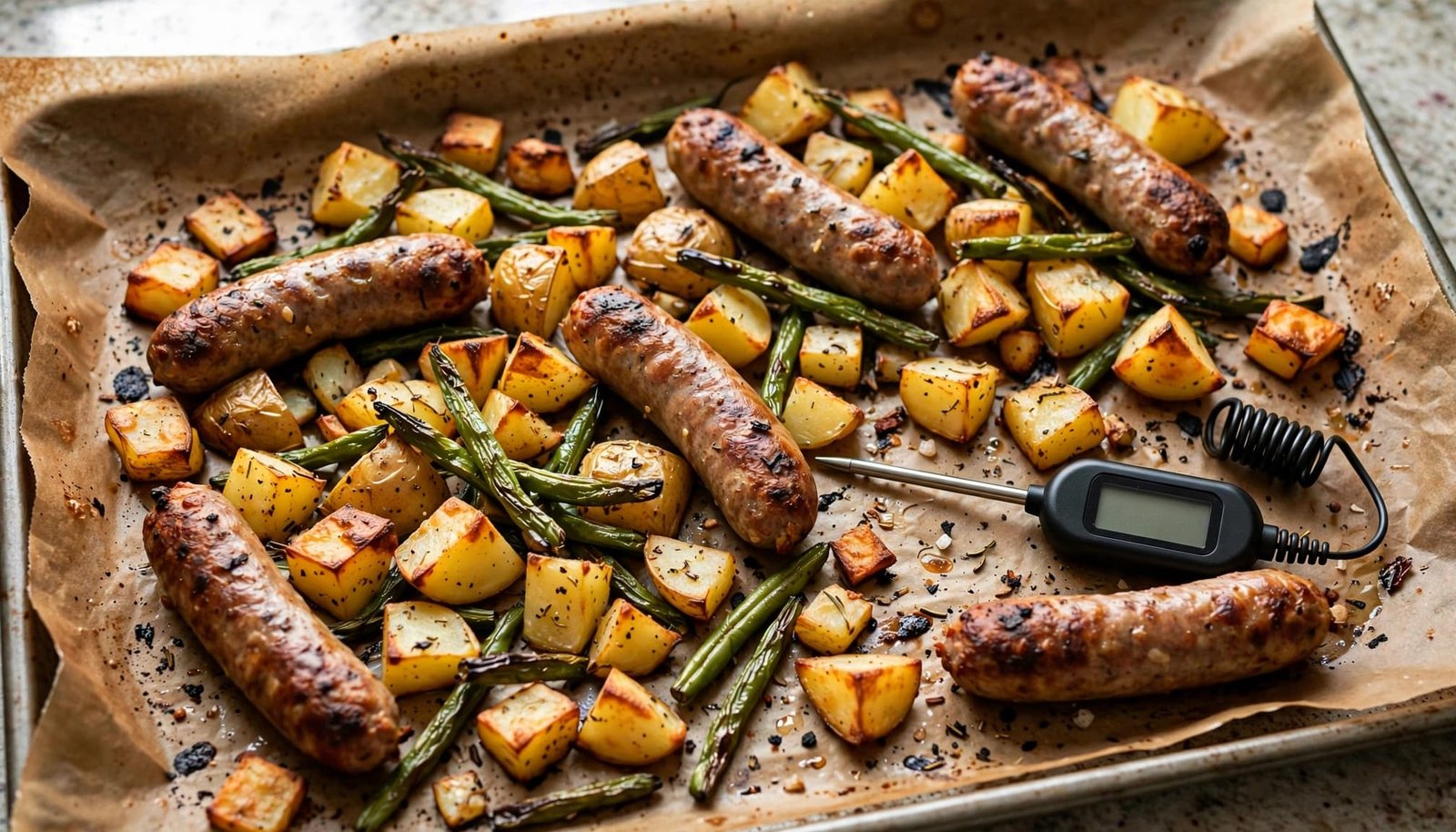
A browned exterior alone doesn’t confirm that fresh sausage is safely cooked. Timing varies with sausage thickness and potato size, so use the thermometer and fork test rather than relying on the clock alone.
Easy Ways to Change the Flavor Without Changing the Method
Keep the potatoes, green beans, sausage, and roasting method the same, then change a few ingredients to give dinner a different feel. Add one or two vegetables or choose a seasoning that suits the sausage you have.
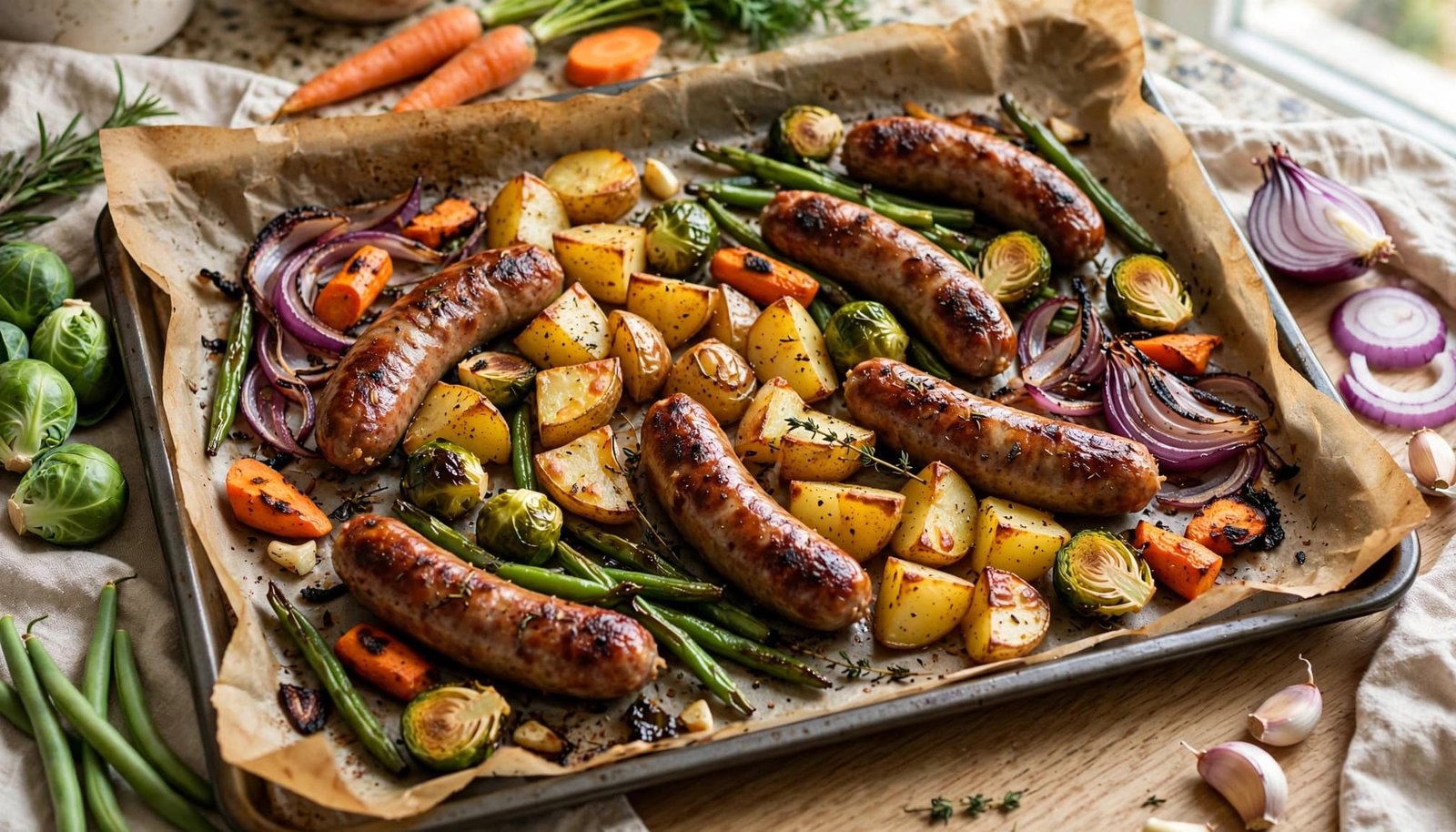
Add onion, garlic, or another fall vegetable
Add sliced onion with the potatoes so it has time to soften and develop a sweeter, savory flavor. Garlic works well, too. Use garlic powder with the vegetables at the start, or add minced fresh garlic during the last 10 minutes of roasting to help keep it from browning too much.
Carrots and Brussels sprouts can join the potatoes. Cut carrots into small pieces and halve or quarter the sprouts, depending on their size, so they cook in the time available. If you’re using the all-at-once method, keep the pieces small; with the staged method, add the quicker-cooking vegetables later if you want them firmer.
Choose a couple of extras rather than filling the pan. A single layer gives the vegetables room to brown, while an overcrowded pan can trap moisture and leave them soft.
Try a different seasoning or sausage style
A small seasoning change can shift the flavor without changing the roasting steps. Try Italian herbs for a familiar savory taste, or use smoked paprika with garlic for a deeper, smoky note. A mild peppery blend adds a little warmth without making the dish too spicy. Start with a modest amount, especially if the sausage is already well seasoned.
Turkey or chicken sausage works in place of pork sausage. Check the package to see whether it’s fully cooked or fresh and raw, since the cooking guidance differs. Cook raw poultry sausage to 165°F, and follow the package directions for fully cooked sausage. The USDA’s sausage safety guidance covers safe handling and cooking temperatures.
Keep the changes simple: one vegetable and one seasoning are often enough to make this sheet-pan dinner feel new.
Serve, Store, and Reheat the Leftovers Safely
Once the sausage and vegetables are roasted, serve them warm straight from the pan or transfer them to a platter. A few fresh additions can finish the meal, and leftovers make an easy lunch or dinner later in the week.
Serve it as a complete meal or add a simple side
Squeeze lemon over the pan just before serving, or add chopped parsley or another soft herb you have on hand. A light vinaigrette works, too, especially if you want a little brightness alongside the savory sausage and roasted potatoes.

The sausage, potatoes, and green beans make a filling meal on their own. If you want to stretch the servings or make dinner heartier, add whole-grain bread, brown rice, or another simple grain. These extras are optional, so you can keep cleanup to one pan when that suits the evening.
Refrigerate and reheat without drying it out
Refrigerate leftovers within two hours of cooking or serving. If the temperature is above 90°F, put them away within one hour. Divide the food among shallow, covered containers so it cools more quickly, and keep your refrigerator at 40°F or below. Use refrigerated leftovers within three to four days, following the USDA’s guidance on leftovers and food safety.
For better texture, spread a portion on a sheet pan and warm it in the oven, or reheat it in a skillet over medium-low heat. Stir or turn the pieces now and then so they warm evenly. The potatoes and sausage may regain some browned edges, though the green beans will be softer than when freshly roasted.
A microwave is handy when you need lunch quickly. Cover the portion, stir it partway through, and check several spots with a food thermometer. Reheat leftovers to 165°F throughout. If the potatoes seem dry, add a small splash of water before warming; add fresh herbs or lemon after reheating for a brighter finish.
Conclusion
Sheet-pan sausage with green beans and potatoes follows a simple formula: sausage, evenly cut potatoes, green beans, and seasoning, all roasted on one pan. Choose the all-at-once method for small potato pieces or give larger pieces a head start with the staged method.
If you use fresh sausage, check its center with a food thermometer. Adjust the herbs and seasonings to suit your household, then give this practical dinner a try on a busy evening.

- Christmas Cookie Ideas for Every Holiday Baker - November 9, 2026
- Christmas Cocktails: Party Drinks, Cozy Sips, and Mocktails - November 9, 2026
- 20 Christmas Appetizer Ideas for Every Holiday Spread - November 9, 2026