Picture this: a plastic container of cold brown rice pushed to the back of the fridge, and a half-used bag of shelled edamame sitting in the freezer. You bought both with good intentions. Now they’re just taking up space.
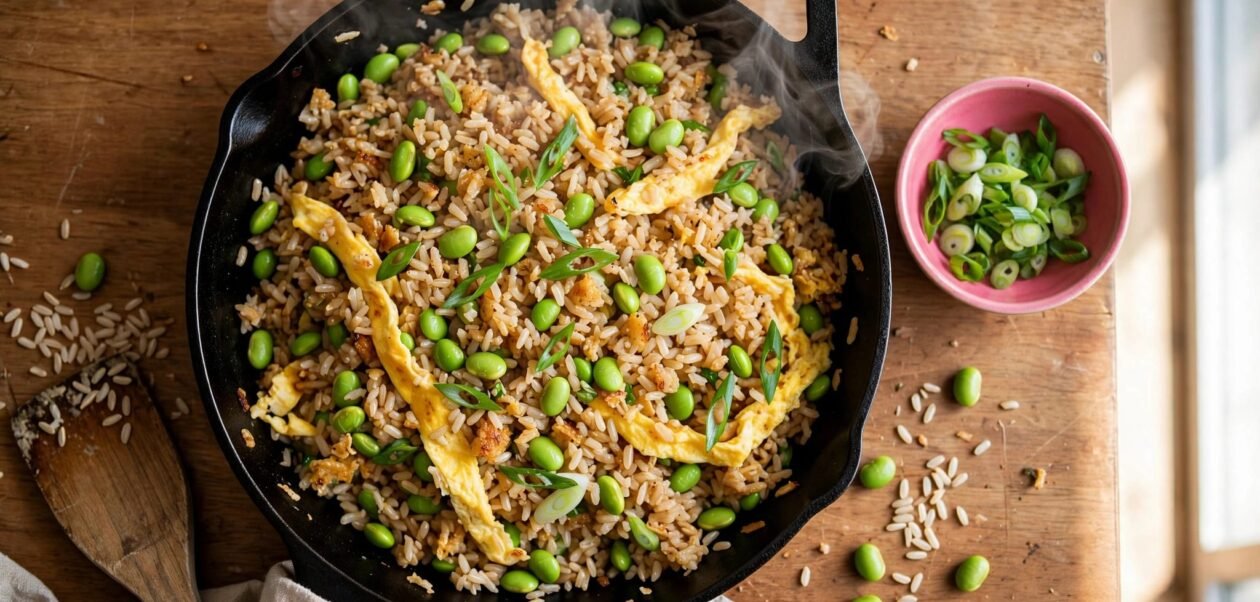
Here’s the good news: those two staples are most of the way to dinner. Edamame fried rice with brown rice and scallions comes together in one skillet, and it’s the kind of meal that feels bright and filling even when you’re cooking on autopilot. Cold rice fries better than fresh, and frozen edamame thaws in minutes, so you don’t need much planning to pull this off. The scallions do double duty: the whites go into the hot pan for depth, and the greens go on at the end for a fresh, sharp bite.
I’ll walk you through the full recipe, from prepping the rice to folding in the eggs, plus simple swaps if your fridge doesn’t match the ingredient list. You’ll also find make-ahead steps for busy nights and quick fixes for the usual problems, like rice that clumps or a pan that tastes flat.
Ready to turn those staples into something you’ll actually look forward to? Start with the rice: cold, dry, and broken up.
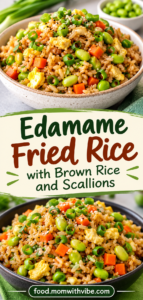
Edamame Fried Rice with Brown Rice and Scallions: A Simple Recipe for Any Night
This recipe serves four and keeps the shopping list short. You need cold rice, frozen edamame, and a bunch of scallions. The rest is likely in your pantry. I cook the components in stages so the rice gets crisp and the eggs stay soft.
Gather the Ingredients for This Edamame Rice Bowl
Set everything on the counter before you turn on the burner.
- 3 cups cold cooked brown rice
- 1 1/2 cups shelled edamame (frozen works well; thaw and pat dry)
- 1 bunch scallions, whites and greens separated
- 2 eggs, beaten
- 2 tablespoons neutral oil, such as canola or grapeseed
- 2 cloves garlic, minced
- 1 teaspoon grated fresh ginger
- 2 to 3 tablespoons soy sauce
- 1 teaspoon toasted sesame oil
Optional additions: 1/2 cup diced carrots or frozen peas. Add them with the edamame if you want extra vegetables.
The scallions do two jobs. Scallion whites go into the hot pan for depth, while the greens go in at the end for a fresh bite. Soy sauce, garlic, and ginger build the base flavor. The eggs add richness without much work.
Cook the Brown Rice First, Then Let It Cool
Brown rice needs to be fully cooked and chilled before it goes into the skillet. If you just cooked a pot, spread it on a sheet tray, let it cool and dry, then break up any clumps. Cold rice fries better because the surface moisture has evaporated. Fresh rice steams in the pan and turns sticky.
Brown rice takes longer than white rice, so cook it ahead or plan on leftovers. Don’t rely on a fixed water ratio; follow the package or rice cooker directions for the rice you have. I often cook extra brown rice earlier in the week for exactly this reason. The stir-fry then comes together in minutes.
Prep the Edamame, Scallions, and Aromatics
Thaw the edamame in the microwave or under cool running water. Drain it well, then pat the beans dry with a clean towel. Dry edamame browns in the pan; wet edamame steams and can make the rice soggy.
Slice the scallions and keep the whites and greens in separate piles. Mince the garlic and grate the ginger. Beat the eggs in a small bowl. Set everything within reach before the pan gets hot. Stir-frying moves fast, and you won’t have time to hunt for the soy sauce once the garlic hits the oil.
Stir-Fry in Stages for Crisp Rice and Bright Flavor
- Heat a large skillet or wok over medium-high. Add a teaspoon of oil, pour in the eggs, and scramble them softly. Transfer to a plate.
- Add the remaining oil, then the scallion whites, garlic, and ginger. Stir for about 30 seconds, just until fragrant. Don’t let the garlic brown.
- Add the edamame and any optional vegetables. Cook for 2 to 3 minutes until hot and lightly blistered.
- Add the cold rice. Press it into an even layer and let it sit for 1 to 2 minutes so it can crisp. Toss, break up clumps, and repeat once or twice.
- Drizzle the soy sauce around the edge of the pan and toss to coat. Return the eggs and fold in the scallion greens. Finish with sesame oil, taste, and adjust.
Keep the heat high enough to brown the rice, but lower it if the aromatics threaten to burn. Serve right away.
Smart Swaps That Keep the Fried Rice With Edamame Flexible
This recipe works because it’s a formula, not a fixed script. You need a grain, something green and protein-rich, a few vegetables, and a sauce that ties it together. Once you see the pattern, you can swap in what your fridge already holds. I keep the structure and change the parts. That way dinner still tastes like edamame fried rice, even when the ingredients shift.
Change the Grain Without Losing the Texture
Brown rice gives this bowl its nutty chew, but it’s not the only option. White rice fries faster and tastes milder, which suits picky eaters. Quinoa brings a lighter, fluffier bite, while barley adds a firmer chew that stands up to sauce. Each grain absorbs liquid differently, so follow the package directions for cooking time and water. Quinoa usually cooks quickly; barley may take longer than you expect. For the best fried rice texture, use cooled grains and break up clumps with your fingers before they hit the pan. Warm, fresh grains steam instead of crisping. I cook extra grain earlier in the week for exactly this reason.
Use What You Have for Vegetables and Protein
Carrots, peas, corn, cabbage, bell pepper, and mushrooms all work well here. Cut them into small, even pieces so they cook at the same pace. Add tofu, chicken, or beans if you want a heartier bowl. Cook raw chicken or tofu fully before mixing it in, and keep raw proteins separate from ready-to-eat ingredients. Dry your vegetables well after washing; wet vegetables steam and make the rice soft. Two or three vegetables are enough. A crowded pan loses heat and turns fried rice gluey. If you’re using several add-ins, cook them in batches and combine at the end. Frozen corn or peas save time and don’t need thawing.
Adjust the Sauce and Heat to Match Your Table
Soy sauce brands vary a lot in saltiness. Start with a small amount, taste, and add more only if the rice needs it. Tamari works for a gluten-free option, and coconut aminos bring a milder, slightly sweet flavor. Put chili crisp, sriracha, or crushed red pepper on the table so each person can choose their own heat. A squeeze of lime or a splash of rice vinegar brightens the whole dish without adding salt. I like to drizzle the soy sauce around the edge of the hot pan first; it caramelizes slightly and spreads more evenly. Taste before you pour, then adjust one spoonful at a time.
Make-Ahead Tips and Safe Leftover Storage for Brown Rice Fried Rice
Edamame fried rice with brown rice and scallions rewards a little planning. I cook the rice and prep the cold components when I have ten minutes, then stir-fry close to dinner. The same habits keep leftovers safe, which matters more with rice than with most grains. Here’s how I split the work and handle what’s left.
Prep Components on a Weeknight Timeline
Start with the rice, because it needs time to chill. Spread hot brown rice on a sheet tray, let it cool, then cover and refrigerate it. Cold, dry grains crisp in the pan instead of steaming. While the rice cools, thaw shelled edamame in the microwave or under cool water, then pat it dry. Slice the scallions and keep the whites and greens in separate containers. Mix the soy sauce, sesame oil, garlic, and ginger in a small jar.
Store each component covered in the fridge. I keep the sauce and scallion greens apart if I’m packing lunch, so the rice doesn’t turn soggy and the greens stay sharp. Cook the eggs and stir-fry close to serving. That final step takes minutes, and the rice keeps its texture. This setup also makes the stir-fry feel less rushed on a busy night.
Cool, Store, and Reheat Leftovers Safely
Cool leftover fried rice quickly. Move it into shallow containers, cover, and refrigerate within two hours. On a hot day above 90°F, use one hour. The clock starts when the rice comes off the heat, not when you finish dinner. Shallow containers cool faster than a deep pot, and they make portioning easier later.
Reheat only what you plan to eat. A skillet over medium heat with a splash of water works well; cover it and stir until hot. The microwave is fine too, but cover the container and stir halfway through. Either way, aim for 165°F throughout. Add fresh scallion greens after reheating so they stay bright. I also keep sauce on the side until serving.
Use refrigerated leftovers within three to four days. For cooked rice, I lean toward the shorter end and reheat it until steaming hot. Don’t leave cooked rice sitting at room temperature for long. Label containers with the date if you tend to lose track. If the rice feels dry after chilling, add a small splash of water before reheating. If you won’t finish it in time, freeze portions in shallow containers and thaw in the fridge. A little planning keeps edamame fried rice with brown rice and scallions ready for a fast dinner or lunch.
Fix Texture and Flavor Problems Before You Serve
Even a good batch of edamame fried rice with brown rice and scallions can go sideways at the last minute. The fixes are small and fast. I keep them in mind at the stove so dinner stays on track.

Rice Is Dry or Clumpy
Clumps often start before the rice hits the pan. Fresh or wet rice sticks together, and a cool pan makes it steam instead of fry. Break up clumps with your fingers before cooking. Then get the pan hot, use enough oil to coat the bottom, and press the rice into an even layer. Let it sit for a minute before tossing. That short press-and-rest gives the grains a chance to crisp. If the rice looks dry, add a splash of water or soy sauce. A spoonful at a time is enough. Don’t drown it, or you’ll trade dry rice for soggy rice.
The Dish Tastes Bland or Too Salty
For bland rice, reach for soy sauce, garlic, ginger, scallion greens, sesame oil, or chili. Start small and taste as you go. If the rice tastes too salty, fold in more plain rice, unsalted scrambled egg, or extra vegetables. Taste before adding more sauce. A splash of vinegar or lime can balance the flavor without adding salt. Soy sauce and edamame both carry salt, so I season in stages rather than all at once.
The Edamame or Vegetables Turn Soft
Wet edamame and a crowded pan cause steaming. Pat the beans dry, thaw frozen vegetables, and drain them well. Cook in a hot pan with space around the pieces. Add scallion greens at the very end so they keep their bite. If the vegetables release water, turn up the heat briefly and keep tossing. The steam burns off, and the edges can brown again.
Conclusion
Edamame fried rice with brown rice and scallions is a flexible recipe you can bend to whatever your kitchen holds. Start with cold brown rice so the grains crisp instead of steaming. Then season in small steps and taste as you go. A splash of soy sauce, a pinch of chili, or a squeeze of lime can pull a flat pan back into shape.
The swaps and fixes in this post exist for a reason. Your fridge won’t always match the ingredient list, and that’s fine. Two or three vegetables, whatever grain you have, and a sauce you trust still get you a good bowl.
Keep the make-ahead habit going, too. Cool portions in shallow containers, refrigerate within two hours, and reheat only what you plan to eat. A short prep session is what makes the final stir-fry feel easy.
Save pin for later

- Air Fryer Salmon Bites with Quick Lemon-Dill Yogurt Sauce - November 26, 2026
- Healthy Spinach Pasta with White Beans and Parmesan - November 26, 2026
- Easy Tofu Stir-Fry with Vegetables and Ginger Sauce - November 26, 2026