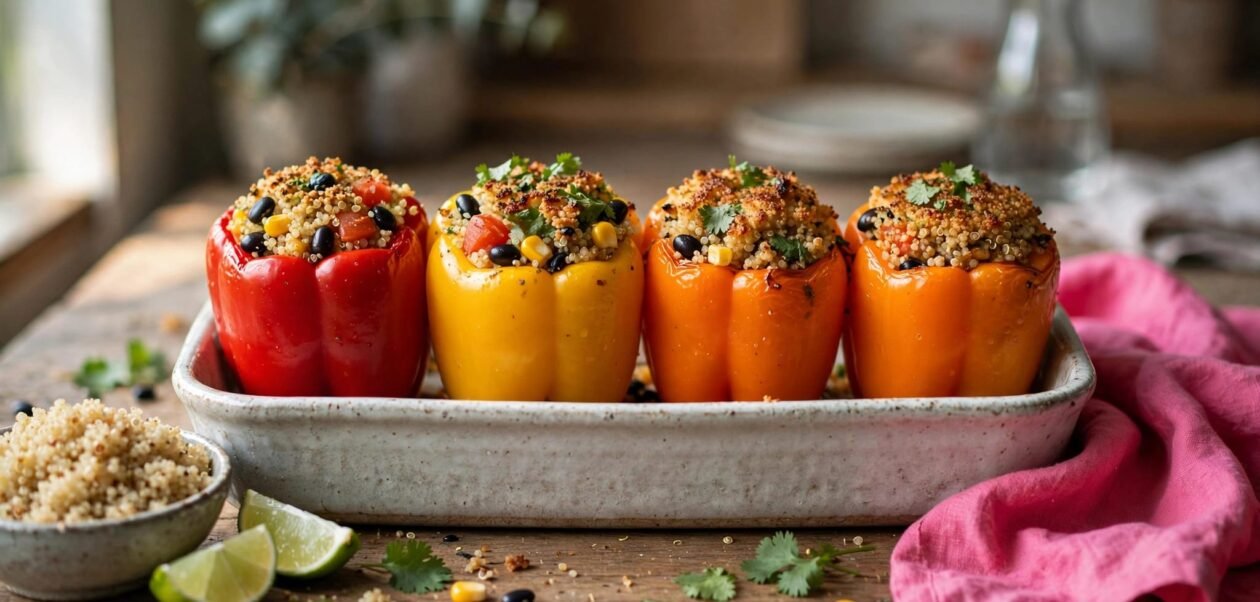
Picture four bell peppers standing upright in a baking dish, their hollows packed with fluffy quinoa, black beans, sweet corn, and diced tomato. The tops catch a little color in the oven while the filling stays moist, and the kitchen fills with the smell of cumin and warm peppers. That’s a dinner we come back to often, and it’s ready once the peppers turn tender.
Quinoa stuffed bell peppers with black beans are filling, flexible, and built from pantry staples you likely already have on hand. A can of beans, a bag of corn, and a few spices do most of the work.
We’ll give you exact amounts for a four-pepper batch, a baking method that works with whole peppers, and swaps that hold up when you’re missing an ingredient. Prep takes about 15 minutes and the oven handles the rest, with a bake time of 45 to 55 minutes. You’ll also find make-ahead tips, storage guidance, and a few ideas for round it out.
Here’s how the whole thing comes together.
Quinoa Stuffed Bell Peppers with Black Beans: The Recipe at a Glance
This batch makes four whole peppers, one generous serving per person. Sweet bell peppers hold a fluffy mix of quinoa, black beans, corn, and tomato or salsa, with cumin and chili powder giving the filling a gentle Southwestern warmth. Shredded cheese and chopped cilantro are optional toppings, so you can keep the meal dairy-free or add melted cheese on top. Here are the exact amounts, the cooking steps, and the visual cues that tell you when the peppers are done.
What You Need for a Hearty Black Bean and Quinoa Filling
Start with four medium bell peppers, one cup of rinsed quinoa, and two cups of vegetable broth or water. The broth adds a savory base, while water lets the salsa and spices lead. Add one 15-ounce can of black beans, drained and rinsed, plus one cup of corn and one cup of diced tomato or salsa.
For aromatics, chop half a small onion and mince two garlic cloves. Season with one teaspoon of ground cumin and half a teaspoon of chili powder. Rinse the quinoa in a fine-mesh strainer unless the package says it is prewashed.
Set out about half a cup of shredded cheese and two tablespoons of chopped cilantro for anyone who wants them. Add salt and a squeeze of lime to taste.
Cook the Quinoa and Build a Filling That Holds Together
Wash the quinoa under cool water, then simmer it with the broth or water using the liquid amount and timing on the package. Cover the pan, cook until the liquid is absorbed, then take it off the heat and let it rest covered for a few minutes. Fluff the grains with a fork.
Meanwhile, soften the chopped onion in a little olive oil over medium heat. Add the garlic, cumin, and chili powder and stir for about 30 seconds, just until fragrant. Stir in the beans, corn, tomato or salsa, and cooked quinoa.
Taste the filling, then adjust the salt, spices, or lime. It should hold together on a spoon without looking soupy. If it seems watery, simmer it uncovered for a minute or two. A small splash of broth loosens it if it feels dry.
About two cups of cooked brown rice can replace the quinoa, but stir it into the seasoned filling rather than cooking it like dry quinoa.
Stuff and Bake Until the Peppers Are Tender
Heat the oven to 375°F. Slice off each pepper top, then remove the seeds and pale membranes. Stand the peppers upright in a baking dish and spoon in the filling loosely instead of packing it down.
Add a small splash of water to the dish, cover with foil, and bake for 30 to 45 minutes. Start checking at 30 minutes. The peppers are ready when a knife slides into the side with little resistance and the center of the filling is hot.
For cheese, uncover near the end, sprinkle it over the tops, and bake until melted. If you pre-roast pepper halves at 400°F for 15 minutes, shorten the final bake. Halved peppers may cook faster, so check them early.
Easy Swaps for Black Bean and Quinoa Stuffed Peppers
The recipe works as written, but it’s also forgiving. A missing ingredient or a different taste preference doesn’t mean starting over. With a few small adjustments, you can keep the same cooking method and still get peppers that hold together and taste great. Here’s how we handle common swaps without turning the filling wet or making the peppers hard to stuff.
Change the Beans, Grains, or Vegetables Without Breaking the Recipe
Pinto beans work just as well as black beans. Use the same amount, so one 15-ounce can, drained and rinsed. Frozen corn goes straight from the freezer into the skillet; no need to thaw it first. For the grain, about two cups of cooked brown rice or another cooked grain can replace the quinoa. Since it’s already cooked, stir it into the seasoned filling rather than cooking it with the same liquid as dry quinoa.
Vegetable add-ins bring color and flavor, but keep them modest. Diced zucchini cooked with the onion adds a little bite. Chopped spinach wilts into the warm filling, and minced jalapeño brings heat. Extra tomatoes work too, but drain them if they release a lot of liquid.
Too many wet vegetables can crowd the peppers or make the filling soupy. Aim for one or two add-ins, and cook off excess moisture before mixing. If the filling looks loose, simmer it uncovered for a minute or two. This keeps the mixture easy to spoon into the peppers and prevents a soggy result.
Make It Cheesy, Vegan, or Dairy-Free
For a cheesy version, stir a small handful of shredded cheese into the filling, or sprinkle it over the peppers near the end of baking. Adding cheese late gives it time to melt without overbrowning. About half a cup total is plenty for four peppers.
To keep the meal vegan or dairy-free, skip the dairy entirely. Set out avocado slices, salsa, chopped cilantro, green onions, or a dairy-free topping at the table. Keeping toppings on the side lets everyone choose what they want. A squeeze of lime or a spoonful of salsa adds fresh flavor without any cheese.
Turn Up the Flavor: Heat, Toppings, and Table Sauces
The filling sets the base, and the table does the rest. This is where our quinoa stuffed bell peppers with black beans become a meal that suits everyone at once, even when one person wants mild and another reaches for the hot sauce. A few small bowls and a quick taste are all it takes.
Keep It Mild or Add a Little Heat
Cumin and chili powder give the filling a gentle Southwestern flavor. They add warmth without much burn, which is why the peppers work well for a family meal. If you want more heat, add minced jalapeño or a pinch of chili flakes to the skillet. Start with a little, taste the filling, and add more only if you want it hotter. The oven can mellow the spices, so taste again after baking.
A squeeze of lime brightens the beans and spices. It also keeps the filling from tasting flat. When you serve different tastes, keep the filling mild and put hot sauce or extra chili flakes on the side. Everyone can season their own pepper, and you won’t need to make a second batch.
A mild filling is a practical choice for a family meal. The table can handle the heat.
Finish Each Pepper with Fresh Toppings
Chopped cilantro, green onions, avocado, salsa, and lime juice bring a fresh contrast to the savory filling. Add delicate toppings just before serving so herbs stay fresh and avocado keeps its texture. Greek yogurt or shredded cheese adds a cool, creamy finish. Keep dairy toppings separate for a dairy-free meal.
Set out a few choices in small bowls:
- Chopped cilantro or sliced green onions
- Diced avocado and lime wedges
- Salsa or a spoonful of hot sauce
- Greek yogurt or shredded cheese
A little salsa or a squeeze of lime may be all you need. The peppers are substantial on their own, so a few toppings are enough. Let everyone finish a pepper to taste, and refrigerate any leftovers within two hours.
Make-Ahead, Storage, and Reheating Tips for Quinoa Stuffed Peppers

A little prep makes quinoa stuffed bell peppers with black beans easier on a busy night. We often make the filling ahead and bake the peppers when dinner gets close. The steps below keep the peppers holding their shape and the leftovers safe to enjoy later.
Prep the Filling or Bake Ahead
Cook the quinoa and prepare the bean, corn, and tomato filling in advance. Let it cool, then transfer it to a covered container and refrigerate. When you’re ready to cook, spoon the chilled filling into fresh peppers and bake as directed. Keeping the filling separate until baking helps the peppers hold their shape and keeps the quinoa from turning too soft.
You can also bake the peppers ahead and store individual portions for later. Cool cooked food promptly, then refrigerate it within two hours. If the room temperature is above 90°F, refrigerate within one hour. Divide larger batches into shallow containers so they cool faster, and place them in the refrigerator without waiting for the food to reach room temperature. Keep your refrigerator at 40°F or below.
Store, Freeze, and Reheat Leftovers Safely
Store baked peppers in airtight containers in the refrigerator and use them within three to four days. For longer storage, freeze fully cooked peppers in freezer-safe containers or wrap them well. Label each portion with the date, and plan to use frozen peppers within about three months for the best quality. Thaw them in the refrigerator when practical.
To reheat several peppers, place them in a baking dish, cover with foil, and warm them in a 350°F oven until hot in the center. For one serving, use a covered microwave-safe dish and heat until thoroughly hot. Leftovers should reach 165°F throughout, so check the center with a food thermometer. Add fresh toppings such as cilantro, avocado, or green onions after reheating so they keep their texture.
What to Serve with Quinoa Stuffed Bell Peppers
A generously filled pepper already brings quinoa, beans, and vegetables to the plate, so dinner doesn’t need much alongside it. We keep the sides simple: one crisp or warm addition, or nothing at all when the peppers are the main event. That approach keeps the meal easy without making it feel sparse.
Pick One Simple Side
The peppers and filling are soft and savory, so a crisp side adds contrast. A green salad with a light vinaigrette is the easiest choice. Shredded cabbage slaw works well too, especially with lime juice or a splash of vinegar to brighten the plate. For a warm option, sauté spinach, kale, or cabbage with olive oil and garlic until just tender. Season lightly so the vegetables complement the cumin and chili in the filling. Warm whole-grain bread can make the meal heartier if you want something to scoop up stray quinoa and beans. Choose one side, or serve the peppers on their own. Generously filled peppers are substantial, and a simple side rounds out dinner without turning it into extra work. A salad or cooked greens also adds another vegetable to the plate, which fits the meal nicely.
Set Out Sauces and Toppings for Easy Serving

Small bowls let everyone adjust their own pepper at the table. Offer salsa, lime wedges, sliced avocado, chopped cilantro or green onions, and plain yogurt for a cool, creamy finish. For dairy-free meals, set out dairy-free yogurt or extra salsa instead. A little lime or salsa may be all you need, while a heartier topping suits a bigger appetite. Keep the bowls modest; a few choices are enough. The quinoa stuffed bell peppers with black beans already carry the meal, and the toppings let each person finish their plate to taste.
Conclusion
Quinoa stuffed bell peppers with black beans turn pantry staples into something colorful and satisfying, and the method stays simple from the first chop to the last spoonful of salsa. Sweet peppers, fluffy quinoa, and hearty beans do most of the work on their own.
A few cues carry the rest. Cook the quinoa until tender, let it rest covered, then fluff it with a fork. Keep the filling moist without letting it turn wet. Bake the peppers until a knife slides in easily and the center is hot, then add cheese late so it melts instead of browning. Fresh toppings go on at the very end.
Make the filling ahead or bake the peppers early when the week gets busy, and store leftovers in the refrigerator or freezer so another dinner is waiting. Use the swaps that fit your pantry, whether that means pinto beans, brown rice, or a minced jalapeño for heat.
Set out a few small bowls and let everyone finish their own pepper. That flexibility is what keeps this meal in our regular rotation.
Save pin for later


- Lentil Shepherd’s Pie with Creamy Mashed Potatoes: A Cozy Meatless Dinner - November 26, 2026
- Crispy Air Fryer Tofu with Vegetables and Brown Rice - November 26, 2026
- Baked Chicken Thighs with Garlic and Roasted Vegetables - November 26, 2026