

A bowl of this dip looks like spring: bright green, glossy, and thick enough to hold a fork upright. Edamame hummus is shelled edamame blended with tahini, lemon juice, garlic, and cumin until creamy, and it’s the dip I reach for when I want a snack that does more than crunch. Edamame is a soybean, so the bowl brings real plant protein along with that fresh, green flavor instead of leaving you hungry an hour later.
The recipe is short, and the color makes even a plain carrot look better. The texture stays creamy enough to cling to a carrot stick, and if you set it beside creamy Greek yogurt dips for vegetables, you’ll have a snack board that covers both. You’ll find a base recipe, protein facts, flavor twists, storage rules, and serving ideas, so the next batch earns a permanent spot in your fridge.
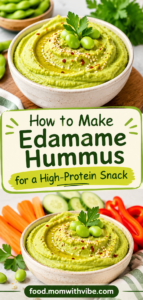
Edamame Hummus for a High-Protein Snack
You can make this edamame hummus for a high-protein snack in one blender or food processor. The base recipe below is the one to learn first. It keeps the ingredient list short and the method calm, so a weeknight batch stays within reach.
What Goes Into the Bowl
This makes four to six servings, depending on how generously you scoop. Set out:
- 1 1/2 cups shelled edamame, fresh or frozen
- 2 to 3 tablespoons tahini
- 2 tablespoons lemon juice
- 1 small garlic clove
- 1/2 teaspoon ground cumin
- 1/4 to 1/2 teaspoon salt
- 2 to 4 tablespoons water
- A drizzle of olive oil
Frozen shelled edamame saves time, and you can follow the package directions for cooking. Tahini brands vary in thickness, so treat the water amount as a guide. Add less at first, then loosen the dip as needed. Nothing here needs a special shopping trip, which is why I keep this recipe in the easy weeknight rotation.
Blend It Smooth, Then Taste

Cook or microwave the edamame according to the package, then let it cool just enough to handle. Add it to the blender with the tahini, lemon juice, garlic, cumin, salt, and a small splash of water. Blend, stop, and scrape down the sides so no thick pocket hides near the blade.
With the machine running, add water one tablespoon at a time. The dip should turn glossy and smell fresh, with a soft peak on a spoon. If it looks stiff, keep blending before you reach for more water. Drizzle in the olive oil at the end if you want a rounder texture.
Taste with a vegetable or cracker before you add more salt or lemon. The dip should taste bright but not sharp, savory but not heavy. Adjust in small steps, because the flavors settle after a quick blend.
How Much Protein Is on the Spoon
Recipes for edamame hummus often list around 4 to 7 grams of protein per serving. That number depends on the recipe and, most importantly, the serving size. A small scoop and a generous mound are not the same snack. If you track protein closely, check your own batch by dividing the total protein in your ingredients by the number of servings you actually get.
This dip doesn’t need to carry a whole meal’s worth of protein to earn a place on the table. It’s a snack that can fit into a balanced day, especially beside whole-grain crackers or crisp vegetables. The edamame supplies most of the protein, while tahini adds a little more. Serving size is the detail that keeps the math honest.
Why This Green Dip Belongs in Your Snack Rotation
A good snack has a job beyond tasting good. It should hold your attention, take the sharp edge off hunger, and leave you ready for the next meal instead of hunting for something else. That’s the space edamame hummus fills in my snack rotation.
A Different Bean, a Different Protein Profile
Edamame is a soybean, while chickpeas are legumes, and each brings plant protein to a dip in its own way. Classic chickpea hummus can be a satisfying choice, yet its protein amount shifts with the recipe, the tahini, and the serving size. Edamame hummus lands in a similar range, with a greener flavor and a fresher finish.
Choosing edamame hummus for a high-protein snack comes down to what you want from the bowl. You get a dip that tastes light and grassy, with enough body to cling to a carrot. The protein won’t turn a snack into a full meal, though it can help the bowl feel more substantial than a handful of crackers.
I treat this as a practical swap, not a superior bean. If you already love chickpea hummus, keep it in rotation and add edamame when you want a different color and flavor. Both can earn a place on the same snack board, and neither needs to win.
Fiber and Fresh Color That Make Snacks Feel Satisfying
Fiber and protein together give a snack more staying power than chips alone. Edamame brings fiber to the bowl, and the smooth texture makes it easy to eat with crisp vegetables or whole-grain crackers. That pairing adds crunch and a little more substance, so you aren’t back at the fridge ten minutes later.
The bright green color does real work too. A bowl of edamame hummus looks fresh on a snack board, and it makes plain cucumber rounds or pepper strips feel more inviting. Color doesn’t change the nutrition label, yet it changes how you reach for the bowl. A dip that looks lively is easier to choose over the bag of pretzels in the pantry.
I like to serve it in a small bowl with carrot sticks, cucumber, and whole-grain crackers arranged around it. The mix of creamy dip and crisp dippers keeps each bite interesting. Because the dip holds its shape, it travels well to a desk lunch or a party platter. That makes edamame hummus a useful option when you want a snack that feels put together without much fuss.
Flavor Twists That Keep This Dip Interesting

A good base recipe should give you a place to start, not lock you into one flavor. Once the texture and salt are right, the bowl can go in whatever direction your pantry and mood support. I keep three directions in rotation, and each one changes the dip without adding much work.
Herby, Bright, and a Little Spicy
Stir minced mint and a little jalapeño into the base for a fresh dip with gentle heat. I add the jalapeño in small amounts, taste, then decide whether to add more. Seeds carry most of the burn, so scrape them out if you want the mint to lead.
For a brighter, more savory version, blend in parsley and cilantro with a pinch of cumin and cayenne. The herbs keep the green color lively, and the cayenne gives the finish a slow warmth. A squeeze of lemon at the end sharpens the whole bowl.
Roasted garlic and smoked paprika take the dip in a deeper direction. The sweetness of the roasted cloves softens the raw garlic bite, while paprika adds a smoky edge that pairs well with pita. If the texture turns thick after you add the herbs, a splash of oat milk brings it back to a creamy scoop. Start small with spice and taste as you go, because the dip settles after a quick blend.
Creamier Texture Without More Oil
When the dip blends up thicker than you want, add water or lemon juice a tablespoon at a time, then blend again. Stop between additions and check the texture with a spoon. The dip should fall easily from the spoon but still hold a soft mound.
If the flavor tastes flat, a pinch of salt or a little lemon usually fixes it. Too sharp? Stir in a spoonful of tahini or a splash of oat milk to round out the edge. Tahini brands vary, so let the texture guide you instead of measuring water by habit.
The goal is control, not restriction. I add liquid in small steps because a loose dip is harder to fix than a thick one. Keep blending, taste with a vegetable, and adjust until the bowl tastes balanced to you. A dip that tastes good on a cucumber will taste different on a cracker, so try the dipper you plan to serve.
Dippers That Add Crunch and Staying Power
Sturdy dippers work best with a thick dip, and the list is longer than most people expect. Carrot sticks, cucumber rounds, and bell pepper strips bring crunch without breaking. Pita wedges and pita chips add a heartier bite, while rice crackers and tortilla chips give you a lighter, saltier option.
When you want a more filling snack, reach for whole-grain crackers or a generous pile of vegetables. The fiber and protein in the dip pair well with either, and the crunch keeps each scoop from feeling heavy. I like to set out two or three dippers rather than a whole spread, because a short list keeps the snack simple.
Match the dipper to the texture. A thin dip suits fragile chips, and a thick bowl can handle thick carrot coins or pita. Taste a bite with the dipper you plan to serve, then adjust the salt or lemon before the bowl reaches the table.
Make-Ahead and Storage Basics for a Fresher Dip

A batch of edamame hummus made on a Sunday can rescue a snack emergency by Wednesday. Storing it well is what keeps the bowl tasting fresh instead of tired. I follow three simple rules for the fridge, the freezer, and the lunch bag, and they keep the dip safe as well as good.
How Long It Keeps in the Fridge
Refrigerate the dip within two hours of making it, or within one hour when the room is above 90 degrees Fahrenheit. Pack it in a sealed container at 40 degrees Fahrenheit or below. A small appliance thermometer takes the guesswork out of that setting.
From there, plan to eat it within three to four days. Some recipe pages list longer windows, yet I keep the shorter range for a homemade dip. The ingredients, the amount of liquid you blended in, and how cold your fridge runs all affect how long a batch stays good. Three or four days is plenty of time for a snack dip.
Spoon out what you need into a serving bowl and put the rest back in the refrigerator. A used spoon left sitting in the container shortens the life of the whole batch.
Freezing and Thawing Without a Grainy Texture
Edamame hummus freezes for up to about three months. Put it in a freezer-safe container and leave a little headroom, since the dip shifts as it sets. Thaw it overnight in the refrigerator instead of on the counter.
Stir well once it softens. Freezing can change the texture slightly, so don’t expect a scoop identical to the day you blended it. When the thawed dip looks grainy or thick, blend in a little water or lemon juice until it smooths out. A food processor gets you there faster than a spoon. Label the container with the date so you know how long it has been waiting.
Packing It for Work or School
Spoon the dip into a small sealed container for work or school. A small container is easier to grab than a full bowl, and it keeps your portion from sitting out on a shared table. Pack sturdy vegetables and crackers in their own container so they stay crisp.
Use an ice pack if the lunch will sit at room temperature for hours. An insulated bag with a cold source keeps the dip chilled until you’re ready to eat, and that matters more than any other packing detail. Toss any dip that sat out for more than two hours.
Save pin for later

- Lentil Shepherd’s Pie with Creamy Mashed Potatoes: A Cozy Meatless Dinner - November 26, 2026
- Crispy Air Fryer Tofu with Vegetables and Brown Rice - November 26, 2026
- Baked Chicken Thighs with Garlic and Roasted Vegetables - November 26, 2026


