Vietnamese food gives you plenty of ways to build a meal, whether you want a bowl of phở, a crisp bánh mì, or fresh rolls with herbs and dipping sauce. The best Vietnam food ideas for home cooks include different textures, ingredients, and levels of effort, so you can choose a dish that fits your kitchen and the time you have.
Regional styles offer helpful clues: Hanoi’s bún chả, Huế’s spicy bún bò Huế, and central Vietnam’s mì Quảng each have their own character. These are guides, not strict rules, and home versions can use practical swaps while keeping the flavors that make each dish distinct. Start with the dishes below, then pick one new ingredient or preparation to try.
Best Vietnam Food Ideas to Make at Home
Vietnamese dishes can look involved, but many follow a simple pattern: prepare a flavorful base, add fresh herbs or vegetables, then balance the meal with a bright sauce. These best Vietnam food ideas each bring a different texture to the table, and you can adapt them with care while keeping their defining ingredients in place.
Build a comforting bowl of pho
Phở is rice noodles served in beef or chicken broth, usually with thinly sliced meat, herbs, and lime. A carefully seasoned prepared broth is a useful shortcut at home. Warm it with aromatics, taste, and adjust the seasoning before adding the noodles and protein.

Northern pho is often savory and restrained, with fewer garnishes. Southern bowls may taste sweeter and come with more herbs and bean sprouts. These are broad regional tendencies, so follow the style you enjoy. For a meatless variation, use vegetable broth and add mushrooms or tofu.
Fill banh mi with crisp, savory layers
A bánh mì is a Vietnamese baguette sandwich with a crisp crust and a tender center. Common fillings include meat or pâté, pickled carrot and daikon, cucumber, cilantro, and chili. For more background on its fillings and place in Vietnamese cooking, see Serious Eats’ introduction to Vietnamese food.
Make the quick pickles ahead, then assemble the sandwich just before serving so the bread stays crisp. Tofu or extra vegetables can make a satisfying home adaptation, though they aren’t standard fillings in every version.
Make fresh goi cuon for a lighter meal
Gỏi cuốn, or fresh rice-paper rolls, often contain shrimp, pork, rice vermicelli, and herbs, with dipping sauce on the side. Soften one rice-paper sheet in warm water, add a modest amount of filling near the center, fold in the sides, and roll snugly. Use less filling than you think you need; overstuffed rolls are harder to close.
You can vary the fillings to suit the meal. Check recipes and sauces for shrimp, fish sauce, and peanuts if anyone at your table needs to avoid those ingredients.
Try Hanoi-style bun cha with a home grill
Hanoi-style bún chả pairs grilled pork with rice noodles, fresh herbs, and a dipping sauce. The pork is served alongside the noodles, often in its own bowl of sauce, rather than simply mixed through. A grill pan or broiler is a practical home option in place of charcoal. Taste of Home’s overview of Vietnamese dishes also describes the grilled pork, herbs, and sauce that define the dish.
Fish sauce, lime, sugar, water, and chili are common sauce ingredients. Mix them to taste, adding a little at a time until the balance feels right. Cook the pork through, then serve it warm with the noodles and herbs.
Explore Vietnamese Food by Region
Vietnamese cooking changes with local ingredients, habits, and family recipes. Regional styles offer a useful starting point, but they aren’t strict rules: two cooks in the same city may season a dish differently. For home cooking, try a regional favorite, then adjust the herbs, sauce, or chili to suit your table. Michelin Guide’s overview of regional Vietnamese cuisine offers more examples of how these dishes vary.
Northern Vietnamese dishes keep flavors balanced
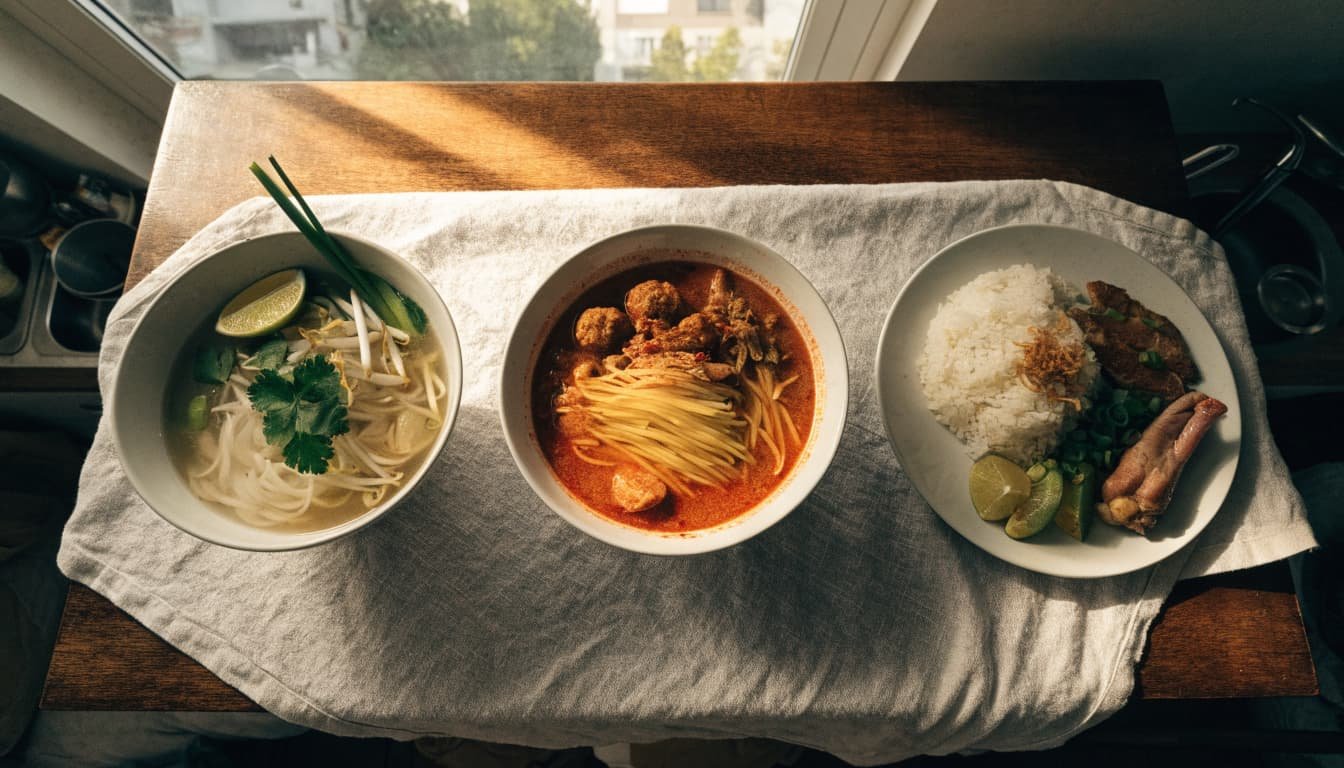
Hanoi and the Red River Delta are a good place to start if you enjoy clear broths and measured seasoning. Northern-style phở often keeps the broth in focus, with fresh herbs, lime, and chili available at the table. Hanoi’s bún chả pairs grilled pork with rice noodles, herbs, and a fish-sauce-based dipping sauce.
At home, keep the meal balanced by serving herbs and crunchy vegetables fresh, then letting everyone add them as they like. Put the sauce on the side, too. That small choice makes it easier to adjust the sweet, sour, and savory notes without overwhelming the pork or broth.
Central Vietnam brings bold local specialties
Central Vietnam includes several dishes with strong, distinct seasoning, though the region doesn’t have one uniform flavor. Huế’s bún bò Huế is a spicy beef noodle soup with an aromatic broth. In Quảng Nam, mì Quảng is served with noodles and a smaller amount of flavorful broth. Hội An’s cao lầu is another local noodle specialty.
These dishes make a good introduction to central Vietnamese food because each has its own character. If you’re cooking at home, add chili gradually and taste as you go. The goal is to keep the dish’s balance, not to make every central recipe equally hot.
Southern cooking leans into sweet and savory notes
Many southern dishes combine sweet, savory, and fresh flavors. Some recipes use ingredients such as coconut milk, palm sugar, garlic, or chili, while others rely on a lighter mix. Cơm tấm, a southern staple, centers on broken rice and is often served as a hearty plate with grilled pork and accompaniments.
For a home version, offer herbs, pickled vegetables, and sauce at the table so each person can adjust the plate. Southern cooking is often described as sweeter than northern styles, but that’s a broad tendency, not a rule for every dish. Taste your sauce before serving and add sweetness a little at a time.
Add Regional Favorites for More Vietnamese Meal Ideas
Once you’ve tried familiar noodle bowls and rolls, regional favorites bring new textures and serving styles to the table. These dishes are manageable at home, especially when you keep the standard ingredients in mind and treat substitutions as your own variations.

Make banh xeo crisp and ready to share
Bánh xèo is a savory Vietnamese crepe with a thin, crisp shell. Rice flour forms the batter, and turmeric gives it a yellow color. Shrimp, pork, and bean sprouts are common fillings. Cook it in a hot pan so the edges turn crisp, then serve it with leafy greens and herbs. Vietnam’s official tourism site describes the crepe with pork, shrimp, bean sprouts, and fresh herbs in its guide to popular Vietnamese street food.
Make one small test crepe before cooking the rest. If the batter spreads too thickly, thin it with a little water; if it stays soft, raise the pan heat slightly. Fillings can vary by recipe, so use the classic combination as a starting point, not a fixed rule.
Serve com tam with toppings and fresh sides
Cơm tấm centers on broken rice and is commonly served with grilled pork. Pickled vegetables, scallion oil, and fish sauce add savory, tangy, or fresh notes to the plate. At home, start with rice, add grilled pork, then arrange a small portion of pickles and any other toppings you enjoy on the side.
That structure keeps the meal easy to adjust. You might add a fried egg or choose different vegetables as a personal variation, while broken rice and grilled pork remain the familiar base. Check the fish sauce label when adapting the dish, since it contains fish and may not suit everyone at the table.
Bring Hoi An flavor to the table with cao lau
Cao lầu is a noodle specialty associated with Hội An. A typical bowl pairs pork with greens and herbs, bean sprouts, and crisp toppings. Its appeal comes from contrast: chewy noodles, tender pork, fresh greens, and a little crunch in each bite.
Use thick rice noodles if that’s what you can find. They won’t reproduce the traditional Hội An noodles exactly, but they give a home version a pleasantly chewy base. Keep the broth or savory dressing modest, and add herbs and crisp toppings just before serving so their textures stay distinct.
Finish with a bowl of chè
Chè is a broad family of Vietnamese sweet treats, not one set dessert. Some versions combine beans, fruit, coconut milk, or tapioca, and they may be served warm or chilled. Choose one simple version for your first try, then add ingredients that suit your taste. Those additions are personal choices, while chè itself covers many different preparations.
Check ingredient labels for allergens, especially in packaged coconut milk, tapioca products, and toppings. A small bowl makes a pleasant finish after a savory meal, and you can serve it at the temperature that fits the recipe.
Adapt Vietnamese Food Ideas to Your Kitchen
The best Vietnamese food ideas are easy to adjust for the people at your table. Think of the suggestions below as home-cooking variations, not traditional recipes. Keep the fresh herbs, lively sauces, and contrasting textures, then use ingredients that work for your household.
Make satisfying meatless versions with vegetables and tofu
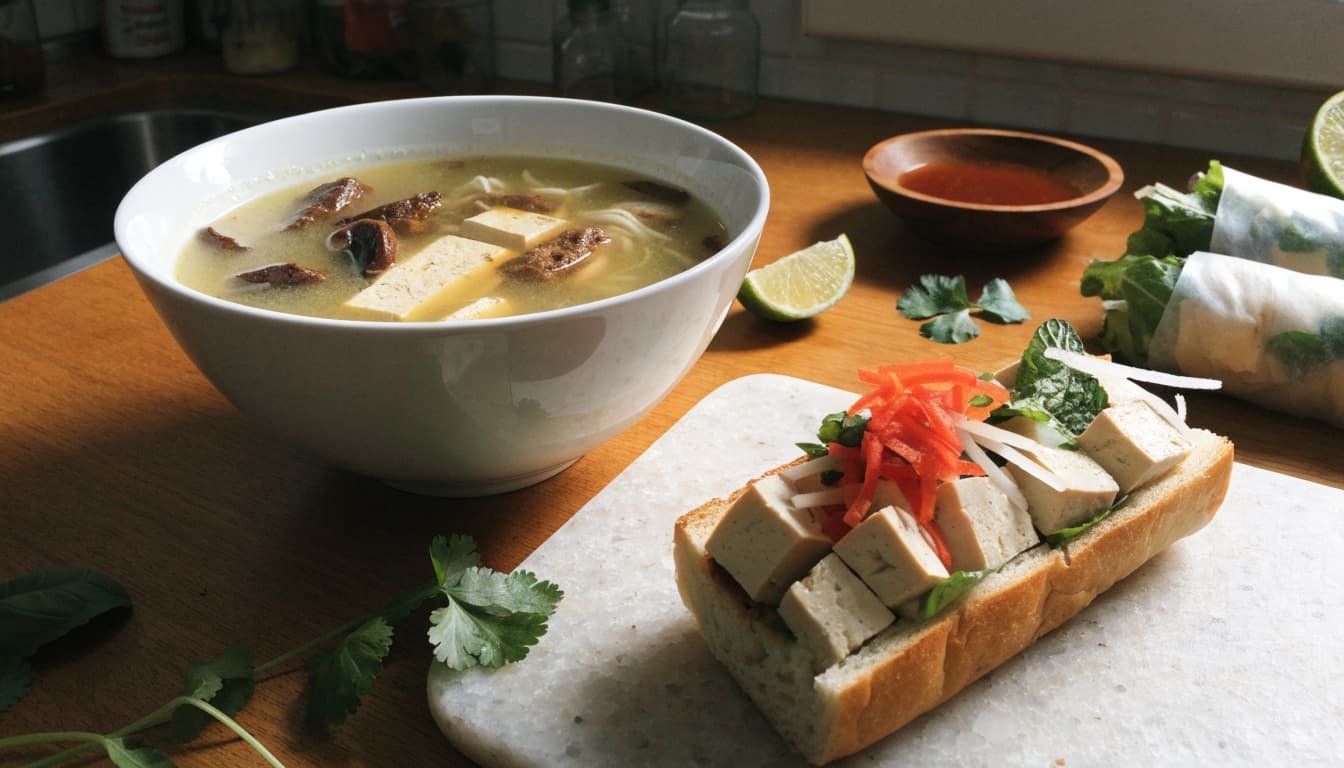
For a meatless pho variation, simmer mushrooms in vegetable broth and add firm tofu near the end so it warms without breaking apart. Serve the noodles with lime, cilantro, Thai basil, or other fresh herbs you enjoy. A little sliced scallion adds a mild, savory finish.
For bánh mì, fill a crisp baguette with pan-browned tofu, cucumber, cilantro, and quick-pickled carrot and daikon. If you don’t have daikon, use extra carrot or thinly sliced cabbage. Fresh rice-paper rolls also work well with tofu, lettuce, herbs, and crisp vegetables. Keep the filling modest so each roll is easier to wrap.
A simple ginger-garlic sauce or peanut-lime dip can bring the ingredients together. Add the sauce a little at a time, especially if you’re serving bowls ahead. Too much can soften crisp tofu or make fresh rolls harder to handle.
Adjust spice, salt, and toppings at the table
Fish sauce, soy sauce, chili, and prepared sauces vary in strength and saltiness. Start with a modest amount, taste, then add more if needed. Fresh lime, garlic, herbs, and black pepper can build flavor without making the dish hotter or saltier. For a family meal, serve chili, extra lime, and dipping sauces separately so everyone can season a bowl or plate.
If a sauce tastes too salty, stir in a little water or lime juice and taste again. When using soy sauce, check the label before adding extra salt. Some brands are saltier than others, and many contain wheat.
Check ingredients carefully when cooking for someone with a food allergy. Fish sauce contains fish, peanut sauce contains peanuts, and some packaged sauces may include wheat, soy, or shellfish ingredients. The FDA’s list of major food allergens includes fish, Crustacean shellfish, peanuts, wheat, and soybeans. Read package labels and keep utensils separate when needed; serving sauces on the side alone may not prevent cross-contact.
Choose the Right Vietnamese Meal for Your Evening
Let your schedule guide the choice. Fresh rolls and bánh mì are easy to assemble, while phở needs more lead time if you’re making broth from scratch. Bánh xèo and bún chả call for time at the stove or grill. A few prepared ingredients can make any of them easier to serve.
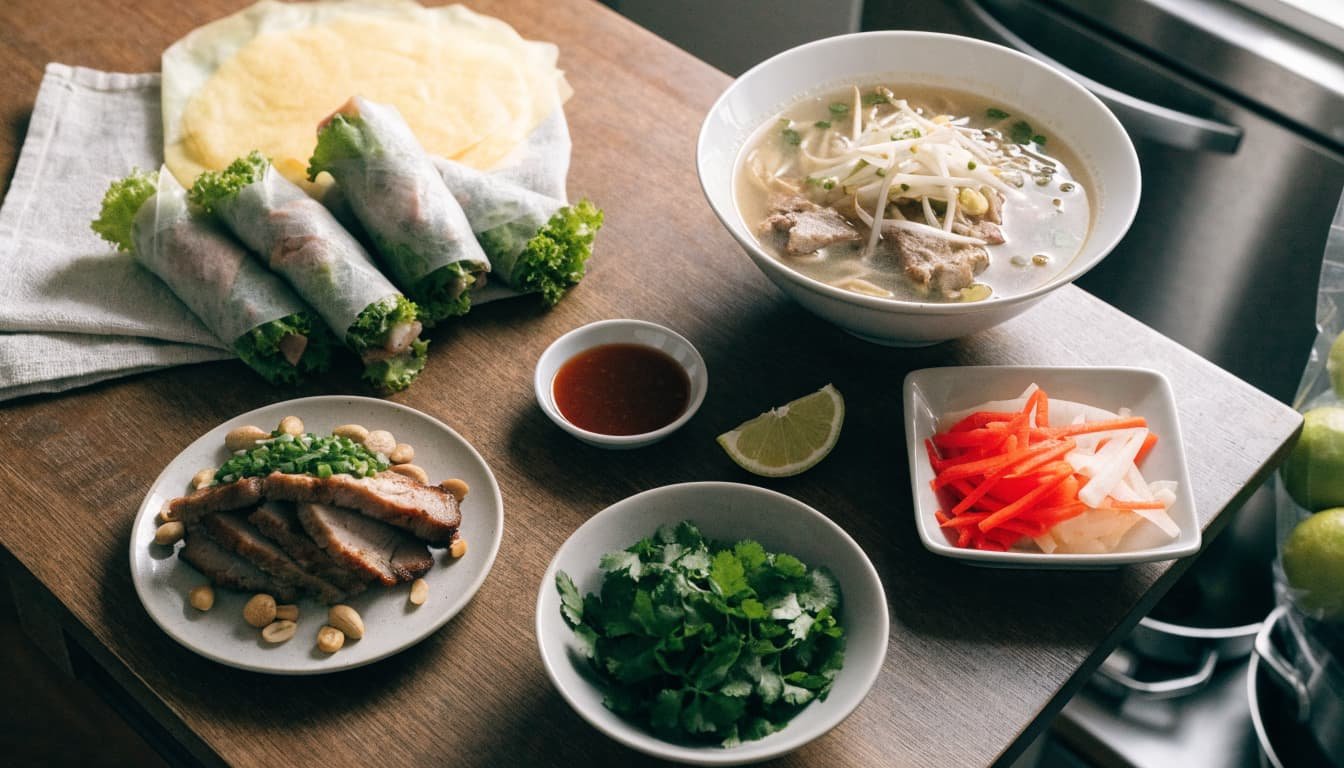
Match the dish to your time and cooking setup
Choose gỏi cuốn or bánh mì when you want a meal built mostly through assembly. Fresh rolls take hands-on work, but you can set out the fillings and let everyone roll their own. For bánh mì, prepare the fillings and assemble the sandwiches just before serving so the bread stays crisp.
A bowl of phở is a good fit when you have broth ready or can start it ahead. Traditional broth may simmer for several hours, so check the total cooking time rather than looking only at prep time. When you have time to cook at the stove or grill, try bánh xèo or bún chả. For more quick meal ideas, browse CookUnity’s Vietnamese recipes.
A little advance prep helps. Make carrot and daikon pickles, wash and chop herbs, or mix a dipping sauce earlier in the day. Keep these components covered and separate until serving, especially the herbs and crisp vegetables.
Build a balanced menu with a few simple components
Choose one main dish, then add a fresh vegetable or herb element and one suitable side. You don’t need several complex recipes on the table. Phở pairs naturally with extra herbs, lime, and bean sprouts. Serve bánh mì with crisp cucumber and pickled vegetables, or add a small salad if you want another fresh bite.
For cơm tấm, offer pickled vegetables alongside the rice and grilled pork. The tangy, crunchy side balances the hearty plate. Use familiar ingredients where practical, but keep the dish’s main flavors in view: fresh herbs and bright lime for phở, crisp pickles for bánh mì, and a savory-sweet sauce for grilled dishes. Set sauces and stronger seasonings on the side so everyone can adjust their serving.
Conclusion
Vietnamese food ideas can fit many kinds of meals, whether you start with a bowl of phở, a crisp bánh mì, a regional noodle specialty, or a small bowl of chè. Each dish offers a different way to bring fresh herbs, savory flavors, and varied textures to the table.
Choose one dish to try first, then adjust the spice and toppings to suit your household. As you cook, explore regional differences with curiosity; small changes in ingredients and seasoning can give each meal its own character.

- Christmas Cookie Ideas for Every Holiday Baker - November 9, 2026
- Christmas Cocktails: Party Drinks, Cozy Sips, and Mocktails - November 9, 2026
- 20 Christmas Appetizer Ideas for Every Holiday Spread - November 9, 2026