A smooth, naturally sweet potato filling under a crunchy pecan crumble makes this casserole feel right at home on a holiday table. We keep the added sweetener and butter modest, so the potatoes shine without a heavy, sugary topping.
Plan on about 8 servings and roughly 1 to 1½ hours from start to finish, depending on potato size and the depth of your baking dish. I’ll share the recipe, the visual cues for a creamy center and crisp top, easy ingredient swaps, and ways to prepare it ahead. For another version, see our sweet potato casserole with crisp pecan topping, then let’s get started with this one.
Lightened-Up Sweet Potato Casserole with Pecan Topping: Ingredients and Method
For this casserole, I keep the sweet potato filling creamy and gently sweet, then add a crisp pecan-oat topping for contrast. The potatoes provide much of the flavor, so a little milk, butter, and sweetener go a long way. It fits naturally among Thanksgiving side dishes with sweet potatoes.
Gather the potatoes, creamy filling ingredients, and crumble topping
Choose sweet potatoes that are close in size so they cook at a similar rate. The ingredient list has two parts: a smooth filling and a nutty crumble.
For the filling:
- Sweet potatoes
- Milk or unsweetened plant milk
- Butter or a dairy-free alternative
- Maple syrup, honey, or brown sugar, in a modest amount
- An egg, optional, for a firmer set
For the pecan topping:
- Chopped pecans
- Rolled oats
- Flour
- Cinnamon
- A small amount of brown sugar or coconut sugar
- Melted butter or oil
I use the sweet potatoes as the creamy base, with just enough milk and butter to make the mash smooth and satisfying. Add sweetener to taste rather than relying on a sugary filling, since the potatoes already bring natural sweetness. If you want a firmer center that slices more neatly, include the egg; without it, the filling will be softer.
For a gluten-free crumble, choose certified gluten-free oats and oat flour. The topping may turn out more tender or crumbly than one made with regular flour, but it still gives the casserole a crisp, nutty finish.
Cook and mash the sweet potatoes until smooth but thick

For deeper flavor, scrub the potatoes and roast them whole at 400°F until very tender, usually 45 to 60 minutes depending on their size. Let them cool enough to handle, then split them and scoop the flesh into a bowl.
If you need a quicker route, peel and cube the potatoes, then boil them until a fork slides through easily. Drain them well and return them to the warm pot for a minute so excess steam can escape. This step helps keep boiled potatoes from making the filling watery.
Mash the warm flesh until smooth, then add milk gradually. Stop when the filling looks creamy but still holds its shape. Stir in the butter or alternative, your chosen sweetener, and the optional egg. I recommend tasting before adding more sweetener, because the potatoes’ sweetness can vary.
Layer the casserole and bake until hot with a golden topping
Mix the pecans, oats, flour, cinnamon, and sugar, then stir in melted butter or oil. The crumble should form small clumps; if it looks wet or pasty, it needs more of the dry mixture.

Spread the mash evenly in a baking dish and scatter the crumble over the top. Keep the topping loose instead of pressing it down, so the clumps can brown as they bake. If you roasted the potatoes at 400°F, lower the oven to 350°F before baking the assembled casserole.
A room-temperature dish may take about 25 to 30 minutes, though the depth of the dish and the filling’s starting temperature affect the timing. Look for a golden topping, a hot and set center, and gentle bubbling at the edges. If the pecans brown before the center heats through, tent the dish loosely with foil. Let the casserole rest briefly before serving so the filling can settle.
Keep the Sweet Potato Filling Creamy and the Pecan Crumble Crisp
The best contrast in this casserole comes from a smooth, flavorful base and a crunchy pecan finish. I keep the filling thick and season it gently, since sweet potatoes and the crumble both bring sweetness to the dish.

Adjust sweetness, spice, and richness to suit the potatoes
Sweet potatoes can vary in sweetness, so I taste the mash before adding more maple syrup, honey, or brown sugar. The pecan topping adds another sweet note, which means a restrained hand in the filling helps keep the whole casserole balanced.
For warmth, stir in a little cinnamon or nutmeg. If you want a brighter flavor, add a small amount of orange zest; it lifts the potatoes without making them sweeter. A few careful additions are enough to let the sweet potato flavor stay at the center.
To make the filling dairy-free, use unsweetened plant milk with olive oil or coconut oil. Add the milk gradually, mashing between additions, because potatoes differ in moisture and may not need the same amount. Stop when the filling looks smooth and creamy but still holds its shape on a spoon. Too much liquid can leave the casserole loose.
An optional egg helps the filling set more firmly as it bakes. Leave it out for a softer center that scoops easily. For more ways to cook sweet potatoes, see our black bean stuffed sweet potatoes.
Roasting whole sweet potatoes at 400°F concentrates their flavor without adding cooking water. If you boil peeled, cubed potatoes instead, drain them thoroughly and return them to the warm pot briefly. That lets extra steam escape before you mash, which helps keep the filling thick.
Make a gluten-free or marshmallow-topped variation without losing the point
The pecan-oat crumble is the main topping here because its crisp texture and nutty flavor balance the soft potato layer. For a gluten-free version, use certified gluten-free oats and oat flour. Check the package when gluten exposure is a concern, since oats can come into contact with wheat during processing. The FDA’s gluten-free labeling guidance explains the standard for foods labeled gluten-free.
Oat flour can make the crumble more delicate than a wheat-flour version, so expect a tender, crumbly texture rather than an exact match. Keep the topping mixture crumbly, not wet or pasty, and scatter it loosely over the filling. Pressing it down can make the top dense instead of crisp.
Marshmallows are another optional finish, but they change the character of the casserole. They bake into a soft, toasted layer and add sweetness, while the pecan crumble stays crisp and brings more nutty flavor. I keep the pecan topping for the main version, and treat marshmallows as a separate variation when a softer, sweeter top is what you want.
Make the Casserole Ahead, Freeze It, and Reheat It Safely
A little advance planning makes this lightened-up sweet potato casserole easier to serve while protecting the pecan topping’s crunch. I keep the moist filling and dry crumble separate until baking, then chill leftovers promptly and reheat only what we plan to eat.
Prepare the filling a day ahead and add the topping just before baking
Spread the mashed sweet potato base in the baking dish, cover it, and refrigerate it for up to 24 hours. Store the dry pecan crumble in a separate covered container. If it sits on the filling overnight, moisture can soften the crumbs before they reach the oven.
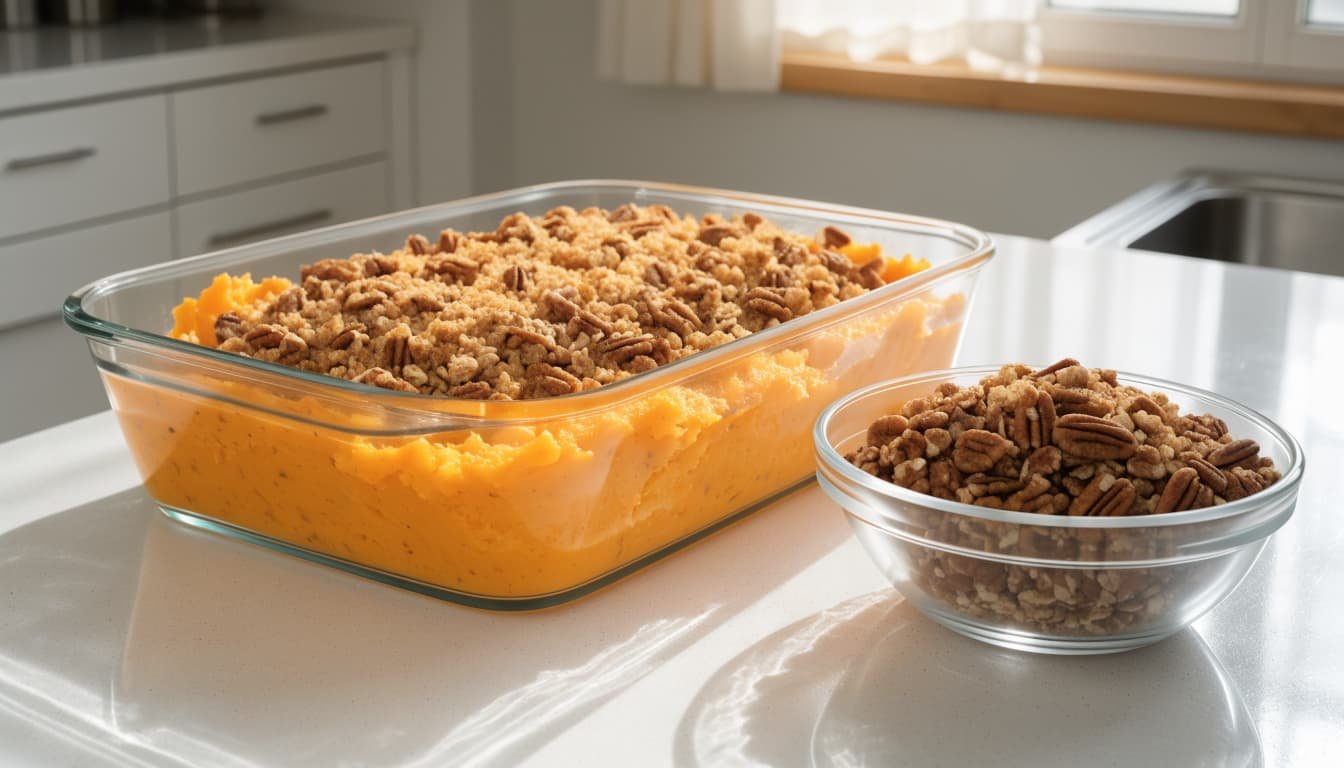
Add the topping just before baking. Because the casserole starts cold, it will need more oven time than one that goes in warm. A shallow dish may heat sooner than a deep one, so check the center rather than relying only on the recipe’s usual timing. The filling should be hot and set; if the pecans brown before the middle warms, loosely cover the dish with foil and continue baking.
For longer storage, wrap the unbaked casserole securely in freezer-safe packaging and freeze it for best quality within about three months. Keep the topping separate, then thaw the casserole in the refrigerator, never on the counter. Allow extra baking time if it is still cold. For more freezer planning ideas, see our guide to healthy freezer meals.
Store leftovers promptly and reheat only what you plan to eat
Refrigerate leftover casserole within two hours of serving, or within one hour when the room temperature is above 90°F. Divide it into shallow, covered containers so it cools faster, and keep your refrigerator at 40°F or below. Use refrigerated leftovers within three to four days. The USDA’s food safety basics cover these storage limits and safe reheating temperatures.
Warm only the amount you plan to serve, and heat it to 165°F throughout. Check the center with a food thermometer, since the edges may warm first. In the microwave, cover the portion and turn it partway through heating to help prevent cold spots. Let it stand briefly, then check the center before eating.
The topping will soften as it chills, but you can bring back some crunch with a sprinkle of freshly toasted pecans. Add them after reheating so they stay crisp.
Serve This Pecan Sweet Potato Casserole with Simple Holiday Sides
The creamy sweet potato filling and crisp, nutty topping bring plenty of texture to the plate, so I keep the sides simple. Pair the casserole with something fresh or savory, and it fits just as naturally into a holiday spread as a family dinner on an ordinary evening.

Balance the rich, sweet, and crunchy parts of the meal
A crisp green salad adds freshness alongside the soft, gently sweet potatoes. For a warm option, serve roasted vegetables such as Brussels sprouts, carrots, or cauliflower, seasoned with herbs, pepper, and a little olive oil. Their savory edges balance the casserole without competing with its pecan topping.
If you want a fuller plate, add a simple grain dish such as quinoa, brown rice, or farro. You only need one or two accompaniments; a few well-chosen sides make the meal feel complete without crowding the table. For more ideas, browse these easy Christmas side dishes.
I like to serve the casserole warm after letting it rest for a few minutes. That brief pause helps the filling settle, so each scoop holds together. If the meal is a buffet, keep hot dishes at 140°F or warmer, following the USDA’s buffet food safety advice.
Finish each serving with a little extra crunch if needed
The pecan-oat crumble turns crisp as it bakes on top of the filling. Separately toasted or candied pecans make a different kind of finish: they keep their own texture when sprinkled over a serving, but they don’t create the baked topping.
For the best contrast, keep extra toasted pecans in a small bowl and let everyone add them to taste. This is especially handy when reheating leftovers, since the topping softens in storage. Add the nuts after reheating, rather than baking them onto the casserole again, for a simple last-minute crunch.
Conclusion
Our lightened-up sweet potato casserole with pecan topping gets its sweetness from the potatoes, with a smooth, thick mash beneath a crisp crumble. Add the dry topping just before baking, then look for a golden top, bubbling edges, and a hot center.
Those simple cues help bring a cozy, balanced side to your holiday table. We hope it makes your meal feel a little more special without adding extra fuss.
Save pin for later


- Lentil Shepherd’s Pie with Creamy Mashed Potatoes: A Cozy Meatless Dinner - November 26, 2026
- Crispy Air Fryer Tofu with Vegetables and Brown Rice - November 26, 2026
- Baked Chicken Thighs with Garlic and Roasted Vegetables - November 26, 2026