Finding a Halloween snack that’s fun to make, easy to share, and allowed at school can take more thought than you’d expect. I like treats that keep prep simple, with a few lighter options for kids who’d rather have fruit than candy.
Here you’ll find no-bake Halloween treats for kids, plus practical tips for checking school rules, reading allergy labels, and packing everything for class. Let’s start with a few easy ideas.
Check school rules before choosing Halloween treats
A treat that works at one school may not be allowed in another. Before you make or buy Halloween treats for kids, check with the teacher or school office. A quick message can save you from preparing a batch the class can’t share.
Ask about homemade food and ingredients
Some classrooms welcome homemade snacks, while others allow only sealed, store-bought foods. Schools may also have rules about nuts or other common allergens, and a “nut-free” request can mean different things in different classrooms. Ask what applies before choosing a recipe.
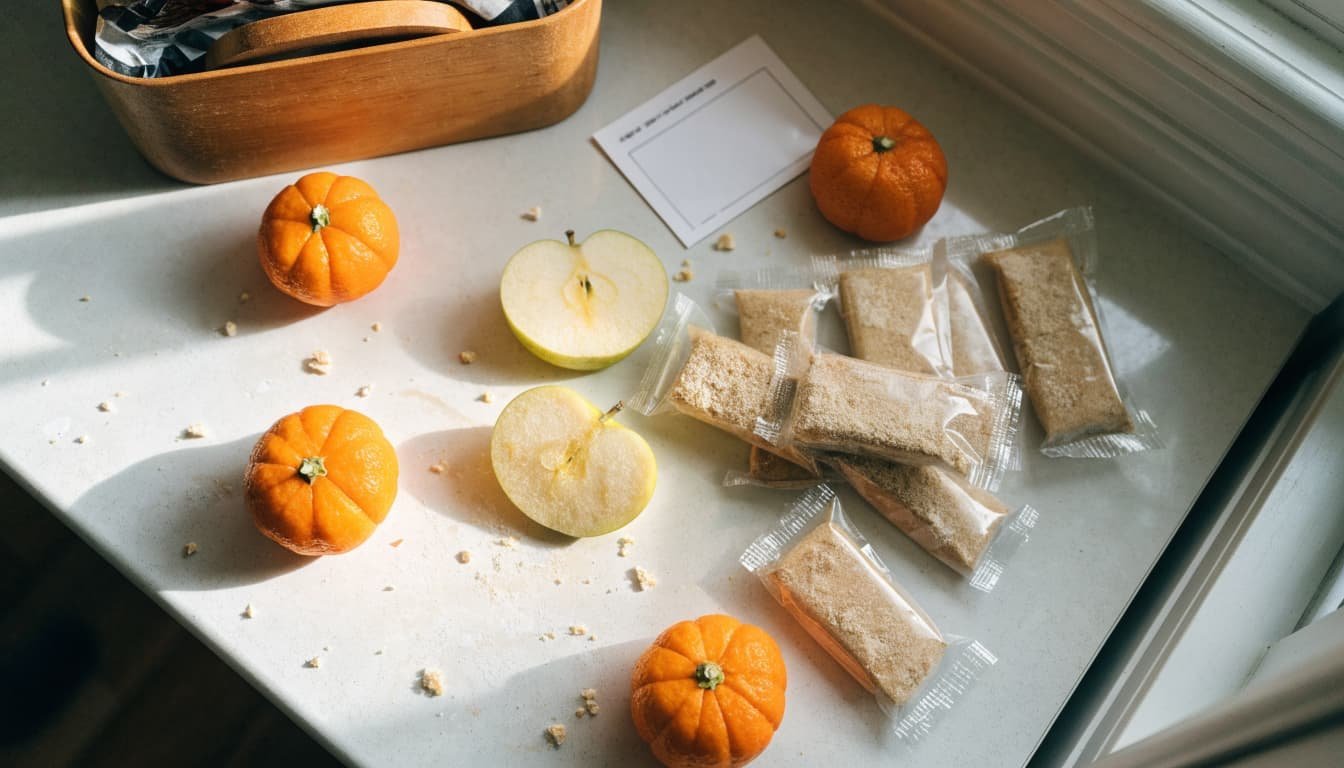
If packaged treats are allowed, keep the ingredient labels attached or send the original packaging. The USDA’s food allergy guidance for school employees recommends checking labels for allergens. If a label is missing or unclear, choose something else rather than guessing.
For homemade treats, ask whether the teacher can accept them and what ingredient information they need. Even a simple recipe can include ingredients that aren’t obvious in the finished snack, so write down everything you used.
Related: 28 Halloween Appetizer Ideas for a Spooky Party
Find out how snacks are shared
A class may ask families to send one treat per child, while another may not allow students to share food at all. The school might also screen snacks before passing them out or ask families to avoid group food activities. These rules help staff manage allergies and reduce the chance of accidental food swaps.
The CDC’s guidance on food allergies in schools recommends avoiding allergens in classroom activities, including parties and holiday treats. It also advises schools to prevent students from trading or sharing food. Follow the classroom’s directions, especially if the teacher asks you to send an individually packed snack.
Check party favor rules, too
Edible favors can have different rules than snacks served during class. Some schools allow a small take-home bag but don’t allow students to eat its contents at school. Others don’t permit candy, homemade gifts, or goody bags at all. A nonfood favor, such as a sticker or pencil, may be a simpler choice.
When you contact the teacher, ask whether the class is having a party, what treats are permitted, and whether favors can go home with students. Then choose a recipe or packaged snack that fits those rules. It keeps Halloween fun for the class and makes planning easier for you.
Easy Halloween Treats for Kids: No-Bake Ideas for School
These no-bake Halloween treats for kids take just a few ingredients and are easy to portion for a classroom. Check the teacher’s rules and every ingredient label first, since no snack is right for every school.
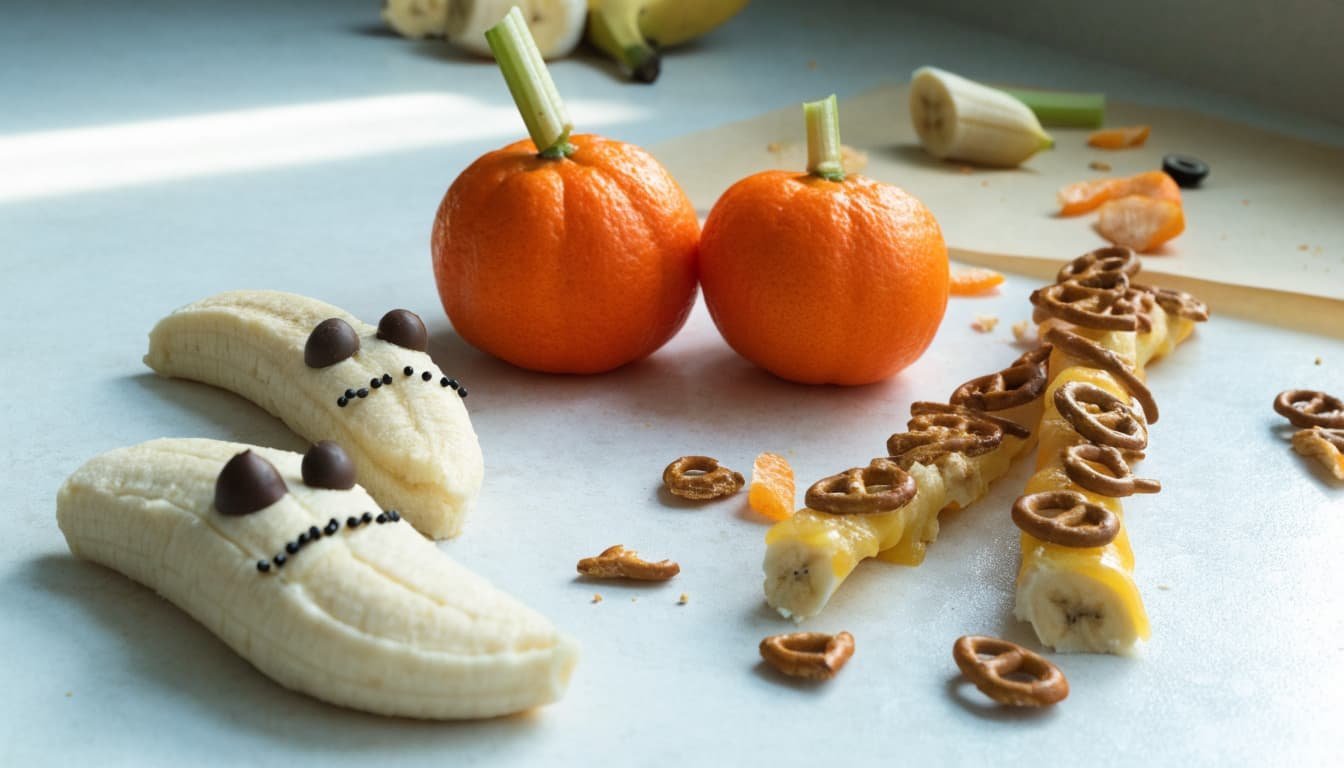
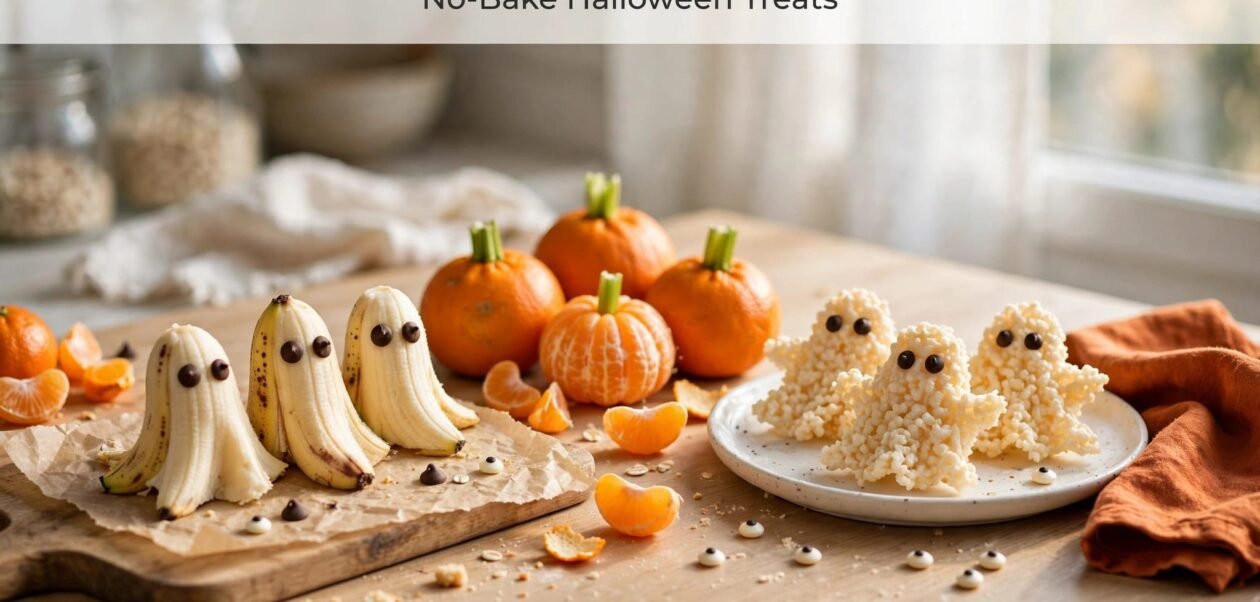
Clementine pumpkins
You’ll need clementines and a few thin celery sticks. Peel each clementine, then tuck a short piece of celery into the top for a quick pumpkin stem. Plan on about 10 minutes for a small batch.
These are naturally portioned, easy for little hands to peel, and don’t need extra sweetener. Keep them whole until serving if you can, and ask whether the classroom has any fruit-related rules.
Banana ghosts
For each ghost, cut a peeled banana in half crosswise and press two mini chocolate chips into the upper half for eyes. They take about 5 minutes, plus a few extra if you’re making a class set.
Bananas can brown after cutting, so make these close to serving time. Chocolate chips may contain or come into contact with allergens, so check the package and school policy before adding them. If the treats need to travel, follow the school’s directions for cold storage.
Pretzel-and-cheese broomsticks
Cut string cheese into short pieces, then make several small lengthwise cuts at one end without cutting all the way through. Push a pretzel stick into the uncut end to make a broom handle. Allow about 10 minutes to prepare a batch.
The cheese needs to stay cold, so pack the broomsticks in an insulated container with cold sources. The USDA recommends keeping perishable lunch foods at 40°F or below and using two cold sources in an insulated lunch bag. See the USDA’s back-to-school food safety tips before packing dairy treats.
Apple monster mouths
Slice apples into wedges, then spread a thin layer of sunflower seed butter between two wedges to make a mouth. Add a few mini marshmallows as teeth, if permitted. This takes about 10 to 15 minutes, depending on how many you’re making.
Pack each mouth separately to keep the slices together. Seed butter and marshmallows may not fit your classroom’s rules, so check before assembling. Since cut apples are perishable, keep them chilled until it’s time to serve.
Raisin-and-pretzel spiders
Set out small cups of raisins and pretzel sticks. For each spider, use a raisin as the body and tuck four short pretzel pieces into each side for legs. A small batch takes about 10 minutes, and kids can help assemble them if the teacher allows classroom prep.
These are easy to portion in individual cups, but pretzels and raisins can be choking hazards for young children. Follow age and classroom guidance, and check labels for allergens.
For the simplest prep, choose one treat that fits the school’s rules and package it in individual servings. Keep perishable options chilled, and send ingredient details if the teacher requests them.
Make Halloween treats a little lighter without losing the fun
A Halloween snack can include something sweet and still feel balanced. Add fruit or plain popcorn alongside a small festive treat, and let kids enjoy a little variety without turning snack time into a lesson about “good” and “bad” foods.
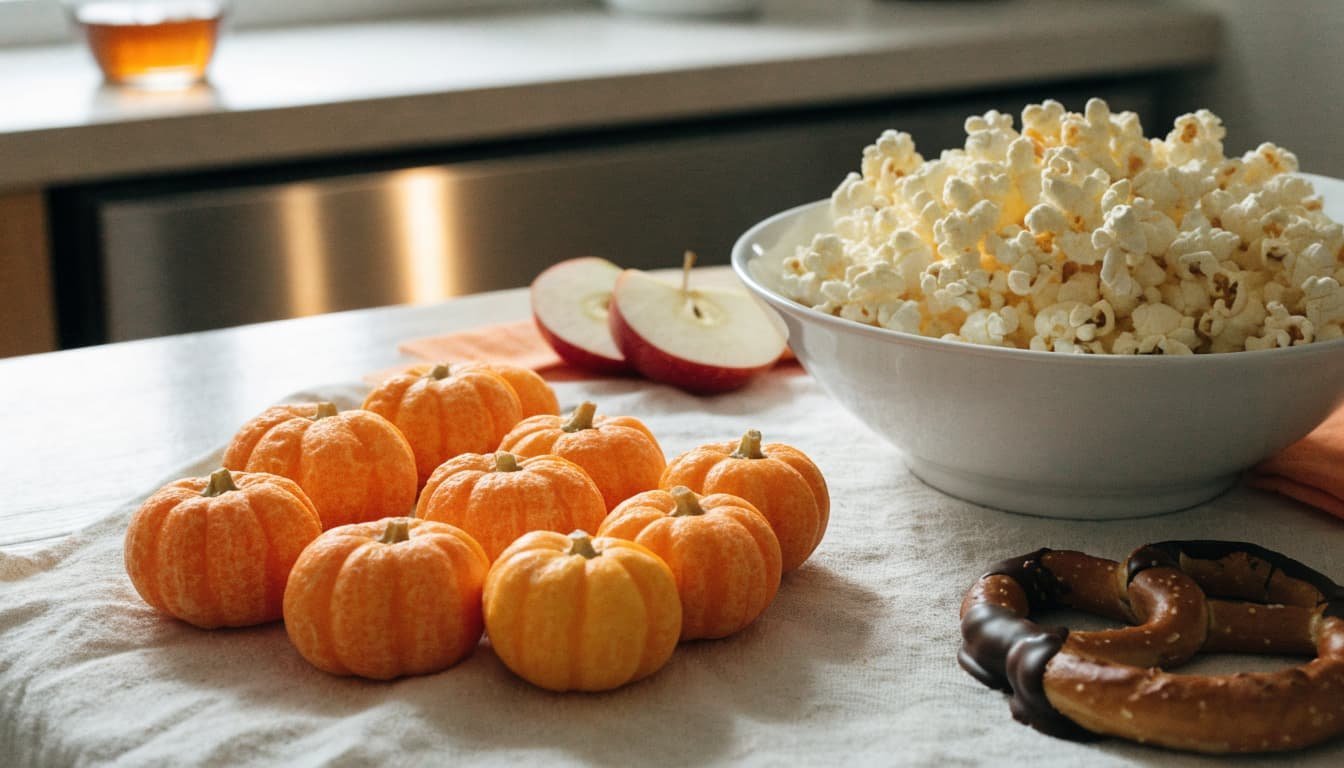
Add fruit and popcorn to the mix
Clementine pumpkins and apple slices already bring color to a Halloween snack table. You can also set out grapes or pear slices, as long as they’re prepared safely for the children’s ages. A few options make it easier for kids to choose what sounds good.
For older children, plain popcorn is another easy addition. Keep the portions small and serve it in individual cups or bags to make sharing simple. Popcorn can be a choking hazard for young children, so follow age and school guidance before packing it.
USDA’s MyPlate food group guidance offers a helpful way to think about variety. You don’t need to make every snack look perfectly balanced; even one fruit option alongside a sweet adds another choice to the table.
Keep the sweet treat, just serve a small portion
Halloween treats are part of the fun, so there’s no need to leave out every cookie, chocolate, or candy. Try pairing one small sweet with fruit, or put a few different snacks on a platter so kids can take what they’ll eat.
Individual portions help keep things tidy at school, too. A small cup of popcorn, a clementine, and one chocolate-dipped pretzel can feel festive without sending an oversized serving. The mix can change based on what your child enjoys and what the classroom allows.
If you’re packing snacks for a group, check with the teacher about ingredients and serving rules. For a simple starting point, MyPlate’s snack ideas for kids include choices across several food groups. Choose a few that fit your class, then add a little Halloween flair with orange napkins or pumpkin-shaped cups.
Prepare, package, and deliver treats with less stress
A little planning makes Halloween treats for kids easier to prep and less messy to share. Check the classroom rules first, then choose one or two treats and pack them in portions that are ready to hand out.
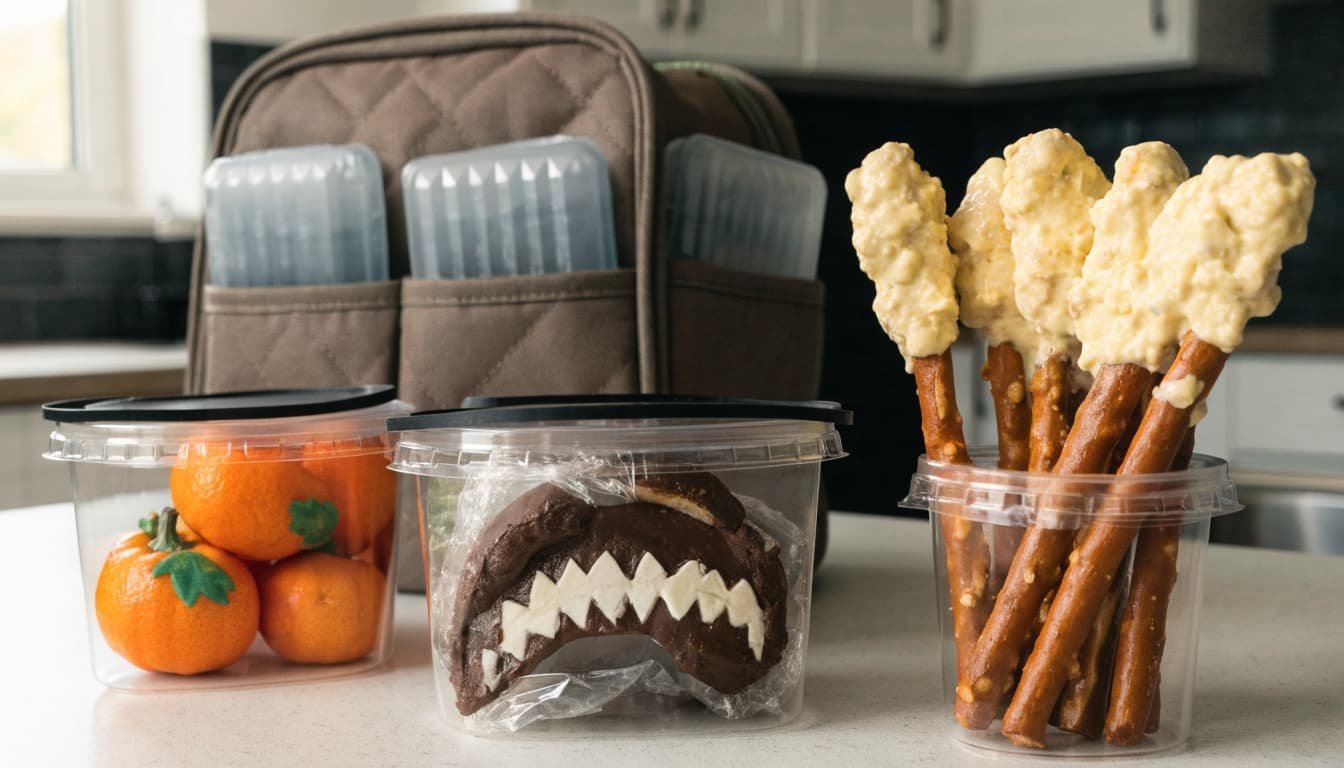
Prep what you can ahead
The night before, wash fruit, clean your work surface, and set out containers, napkins, and any shelf-stable ingredients. You can portion pretzels or raisins ahead, too. Wait to cut apples or assemble banana ghosts until closer to serving, since cut fruit can brown.
Before handling food, wash your hands with soap and water for 20 seconds. Use clean utensils and containers, and wash the counter between ingredients. If you’re making treats with several components, keep them separate until you’re ready to assemble. This helps keep everything neat and makes it easier to leave out an ingredient the class can’t have.
Pack treats to travel well
Individual portions are easier for teachers to distribute and help prevent kids from reaching into a shared container. Use sealed food-safe containers or bags, and keep ingredient packaging nearby if the teacher asks to check labels. A napkin or small paper cup can catch crumbs and keep sticky fruit from touching other snacks.
For cheese, cut apples, or other perishable treats, pack an insulated lunch bag with at least two cold sources. Keep the bag out of direct sun, and don’t leave perishable food at room temperature for more than two hours, or one hour when it’s above 90°F. The USDA’s advice for keeping bag lunches safe covers cold sources and insulated containers.
If the treats will sit at school before snack time, ask the teacher where they should go. Some classrooms have a refrigerator, but don’t count on it unless you’ve confirmed. Choose a sturdy container that won’t tip in a backpack, and pack delicate items, like banana ghosts, in a single layer.
Keep a non-food backup ready
Some classrooms don’t allow shared treats, even when the food is store-bought or allergy-conscious. A small non-food favor can save the day. Try stickers, Halloween pencils, or mini erasers, and check with the teacher before sending anything that could be a choking hazard for younger children.
You can also ask whether the class prefers no favors at all. When food sharing isn’t allowed, let the teacher decide what fits the classroom rules. That way, your child can still join the Halloween fun without putting staff in an awkward spot.
Conclusion
The best Halloween treat for kids at school is one that follows classroom rules, is easy to portion, and works for the children receiving it. Choose one simple idea, check the ingredients and school guidance, and keep a non-food option in mind in case food sharing isn’t allowed.
A little planning can make a festive snack easy to share and less stressful to pack. When the treat fits the classroom, kids can enjoy the fun without extra fuss.
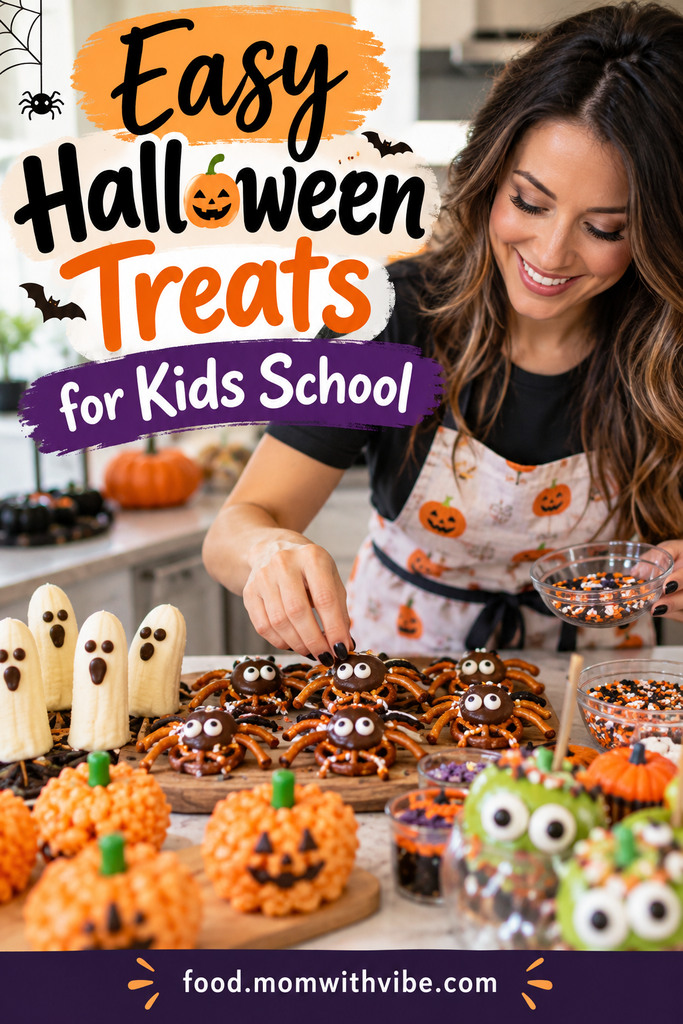
Save the pin for later

- 30 Halloween Dessert Ideas for Parties, Family Nights, and More - September 29, 2026
- Easy Halloween Treats for Kids School - September 29, 2026
- 28 Halloween Appetizer Ideas for a Spooky Party - September 29, 2026