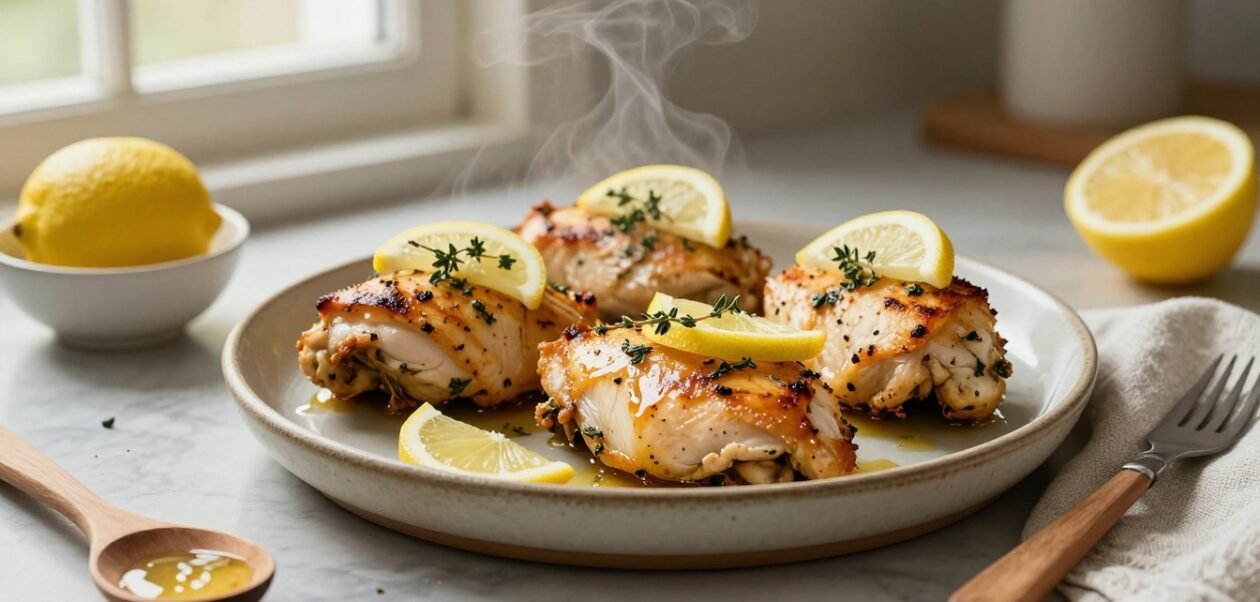
Tender chicken breast takes on fresh flavor with lemon, garlic, and herbs, making dinner feel satisfying without a long ingredient list. You can cook it in a skillet or finish it in the oven, then serve it with vegetables, brown rice, quinoa, or another grain you have on hand.
A short marinade adds flavor, but a few practical steps help keep the chicken juicy: cook it to 165°F, check the thickest part with a thermometer, and let it rest before slicing. Start with the simple marinating and cooking tips below.
Lemon Herb Chicken Breast for a Simple Healthy Dinner
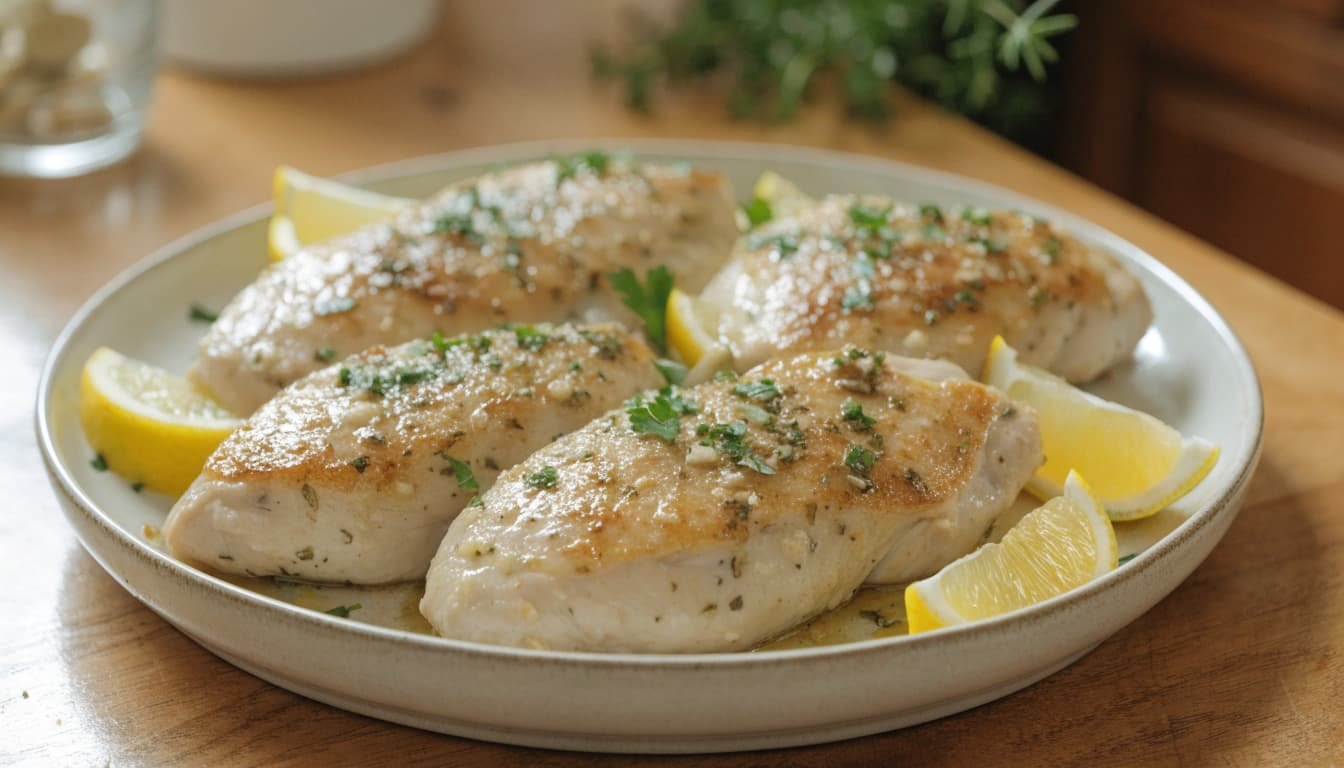
This lemon herb chicken breast recipe starts with four boneless, skinless breasts and a fresh lemon-garlic marinade. Cook them in a skillet for a quick sear or bake them in the oven; timing depends on each breast’s size and thickness.
What You’ll Need for the Lemon Garlic Marinade
Use these amounts for four chicken breasts. You can adjust the herbs to match what you have on hand.
- ¼ cup lemon juice
- ¼ cup olive oil
- Zest of 1 lemon
- 2 to 3 garlic cloves, minced
- 1 teaspoon dried oregano
- 1 teaspoon dried mixed herbs
- Salt and black pepper, to taste
The olive oil carries the garlic and herb flavors across the chicken, while lemon juice and zest bring a fresh, bright taste. Add salt gradually, especially if you plan to serve the chicken with salty sides such as seasoned rice or roasted vegetables.
Fresh herbs work well, too. Use chopped parsley, thyme, or basil in place of some or all of the dried herbs, or scatter them over the cooked chicken just before serving. If you’re using fresh herbs in the marinade, chop them finely so their flavor spreads through the oil and lemon.
Why This Lean Chicken Makes a Satisfying Meal
Boneless, skinless chicken breast gives you a lean, protein-rich base for dinner. Its mild flavor pairs easily with lemon and herbs, and it fits alongside vegetables, grains, or a simple salad.
The nutrition of the finished meal depends on more than the chicken. Portion size, how much oil and salt you use, and the sides on your plate all affect the overall meal. For a lighter plate, use a moderate amount of oil and season with salt a little at a time. You can check ingredient-specific nutrition details in USDA FoodData Central, since values vary with the food and serving size.
Prep and Marinate the Chicken So It Stays Tender
A little prep helps lemon herb chicken breast cook evenly and take on flavor without leaving it in the marinade too long. Keep the chicken cold while you work, and give each piece a similar thickness so the thinner ends don’t dry out before the centers are done.
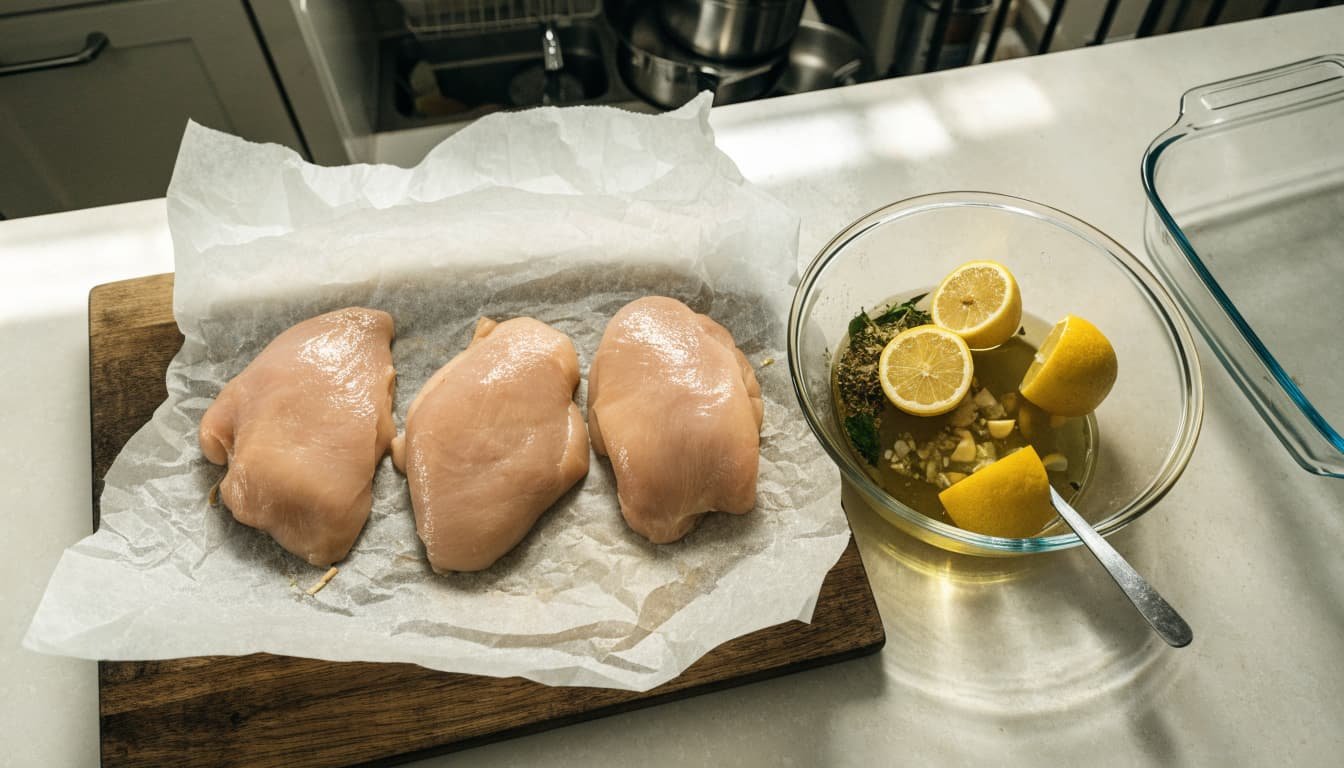
Flatten Thick Parts and Coat Every Piece
Pat the chicken dry with paper towels. Place each breast between sheets of parchment or plastic wrap, then gently pound the thicker areas until the pieces are close to an even thickness. This helps them cook at a similar pace, which makes it easier to keep the lean meat tender.
Whisk the lemon juice, olive oil, garlic, and herbs in a small bowl. If you’d like extra marinade to serve with the cooked chicken, set aside a clean portion now, before it touches raw poultry. Add the chicken to the remaining marinade in a covered dish or food-safe bag, turning each piece so it’s coated all over.
Refrigerate for at least 20 to 30 minutes. For the freshest lemon flavor and a firmer texture, use a shorter marinating window rather than leaving the chicken in the acidic mixture overnight. USDA guidance allows poultry to marinate in the refrigerator for up to two days, but longer isn’t needed for this recipe. Keep raw chicken refrigerated, never on the counter, and discard marinade that touched it unless you boil it before serving. See the USDA’s guidance on marinating poultry for safe handling details.
Don’t rinse raw chicken, since splashes can spread bacteria around the sink and nearby surfaces. Wash your hands and clean any board or counter that came into contact with it.
Use Fresh or Dried Herbs Without Overcomplicating It
Dried oregano and mixed herbs are convenient for the marinade and work well with lemon and garlic. If you have fresh parsley, basil, or thyme, you can use those instead or add them just before serving.
There’s no need to shop for a long list of herbs. Use what you have, then scatter a small handful of chopped fresh herbs over the cooked chicken for a brighter finish. Fresh herbs added at the end keep their flavor clear and give the plate a fresh, simple look.
Cook Lemon Herb Chicken Breast in a Skillet or Oven
Choose the skillet for golden edges and a quick pan sauce, or bake the chicken when you want a more hands-off method. These cooking times are starting points for average, evenly flattened breasts. Thickness, pan material, and oven performance all affect how quickly the chicken cooks, so use a thermometer to check doneness.
Sear the Chicken in a Skillet for Golden Edges
Pat the chicken dry before cooking. A dry surface browns more easily, while wet marinade can make the chicken steam. Heat a lightly oiled skillet over medium to medium-high heat, then add the breasts in a single layer. Leave space between them, and cook in batches if they touch.
For evenly flattened breasts, start with about 5 to 6 minutes per side. Let the first side brown before turning. If the chicken sticks, give it another moment; it often releases more easily once a golden crust forms. Thicker pieces may need more time, while thinner ones can finish sooner.
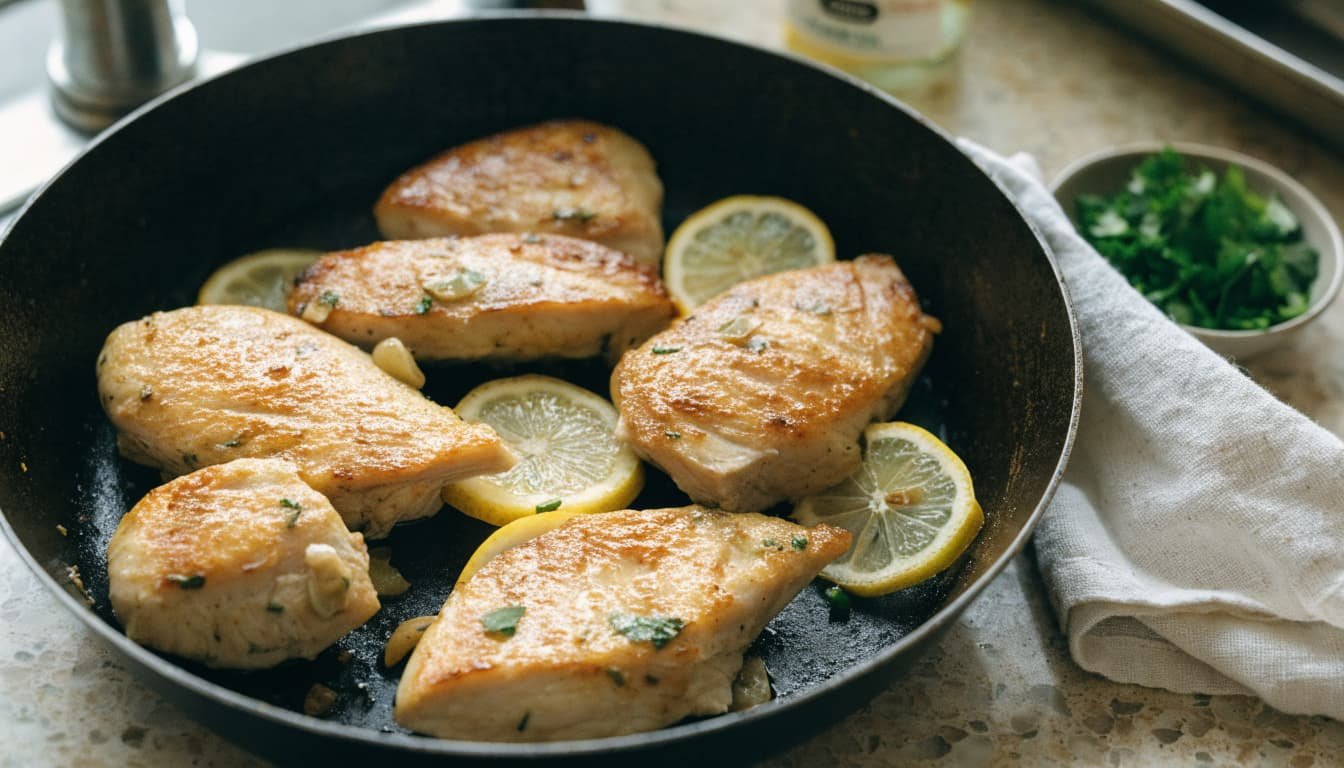
The browned bits left in the skillet add savory flavor. For a quick lemony pan sauce, move the cooked chicken to a plate, add a small splash of water or broth, and scrape up the bits as the liquid simmers. Spoon the sauce over the chicken before serving.
Bake a Hands-Off Batch in the Oven
Heat the oven to 400°F and arrange the chicken in a lightly oiled baking dish. Leave a little space between the breasts so hot air can circulate. Add a few lemon slices around or on top of the chicken for a fresh aroma.
Bake average-sized breasts for about 22 to 25 minutes as a starting estimate. Larger or thicker pieces may take longer, and smaller breasts may cook sooner. Avoid pouring excess marinade into the dish; too much liquid can leave the surface watery instead of lightly browned. If you want a little color, spoon some of the pan juices over the chicken near the end of cooking.
Check the Thickest Part for 165°F
Use an instant-read thermometer in the thickest part of each breast, keeping the probe away from the skillet or baking dish. If a breast is uneven, check its thickest area and another spot nearby. The center of the meat needs to reach 165°F (74°C). Follow the FoodSafety.gov safe temperature chart for poultry guidance.
Color and texture alone can’t confirm that chicken is safely cooked. Once each piece reaches 165°F, let it rest briefly before slicing so the juices settle. This short rest helps keep the lean meat moist, whether you cooked it in a skillet or the oven.
Build a Balanced Dinner Around the Chicken
Lemon herb chicken breast pairs easily with vegetables and a filling side, so you can build dinner around what your family likes and what you have on hand. Choose one grain or potato and one or two vegetables for a colorful plate without adding much prep.
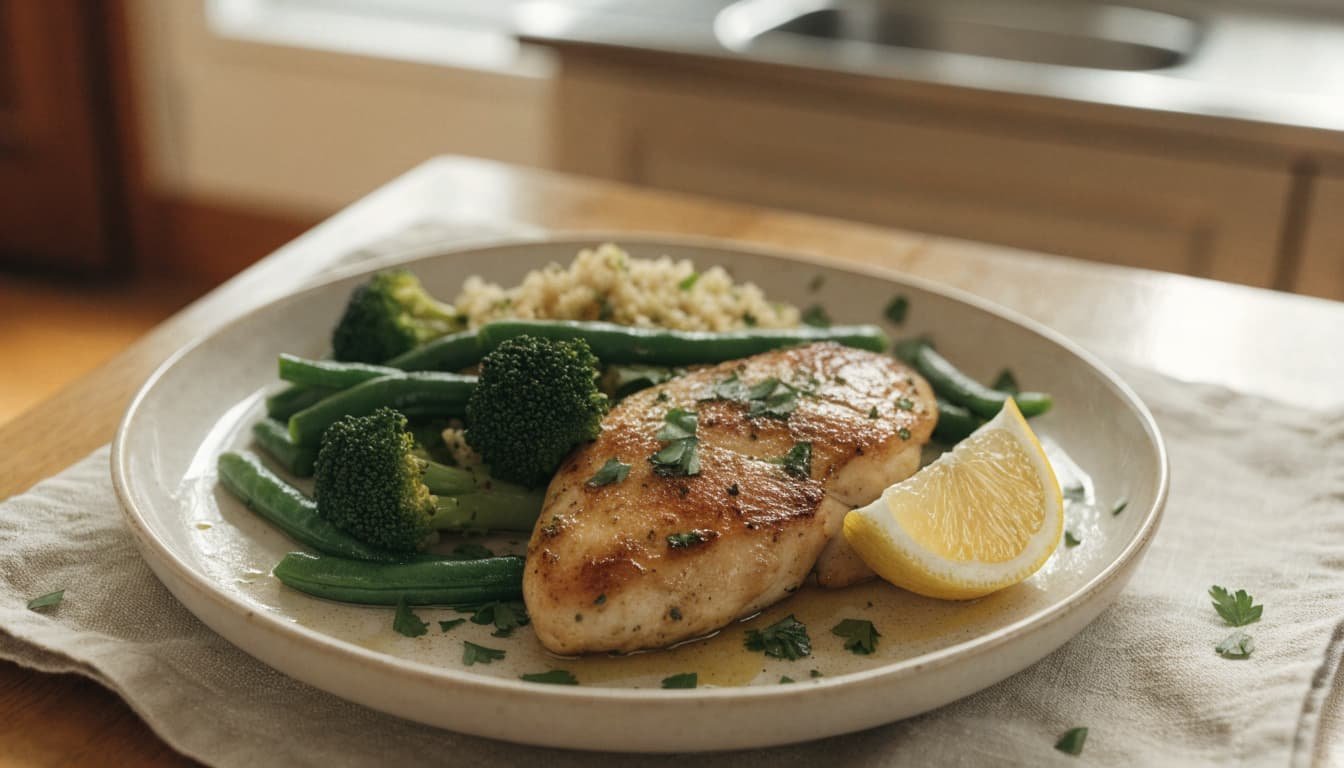
Pair It With Vegetables, Grains, or Potatoes
Roasted broccoli, green beans, and zucchini all work well beside the chicken. A crisp salad adds a cool, fresh contrast to a warm skillet or oven-baked dinner. For a heartier plate, serve brown rice, quinoa, farro, or potatoes. Use package directions for the grain you choose, since cook times and liquid amounts vary.
You don’t need to prepare every side at once. Pick one grain and one or two vegetables, then roast or cook them while the chicken rests. Cut vegetables into similar-sized pieces so they cook at about the same rate. A little oil, salt, pepper, and dried herbs are enough to bring out their flavor.
The USDA’s MyPlate food-group guidance offers a simple way to think about combining vegetables, grains, and protein foods. Treat it as a flexible reference, not a fixed portion rule. Serve amounts that match each person’s appetite and dietary needs; smaller appetites may need less, while a more active or hungry diner may want an extra scoop of rice or vegetables.
Finish With Lemon, Herbs, or a Cool Yogurt Sauce
Just before serving, squeeze a little lemon over the chicken and scatter on chopped parsley or dill. The fresh herbs brighten the garlic and dried herbs in the marinade without adding another step to dinner.
For a creamy option, stir lemon juice and chopped herbs into plain yogurt with a pinch of salt. Start with a little lemon, then taste and adjust. If the sauce is too thick to spoon over the chicken, add water a teaspoon at a time until it reaches a consistency you like. Chopped mint also works well with parsley or on its own.
Taste the sauce before adding more salt, especially if the grains are seasoned or you’re serving salty toppings. Keep it in a small bowl at the table so everyone can add as much as they like.
Easy Swaps, Leftover Storage, and Juicy Reheating
A few small changes can adjust the lemon and herb flavor without changing the simple feel of this dinner. Store any extra chicken promptly, then reheat only what you plan to serve.
Adjust the Flavor With Simple Ingredient Swaps
For a little warmth, add a pinch of paprika or red pepper flakes to the marinade. Dried herbs are handy when fresh ones aren’t available, and you can use the oregano and mixed herbs already listed. If you prefer a milder lemon flavor, reduce the juice slightly. Add a little extra zest when you want more citrus aroma without making the marinade more sour.
Boneless, skinless chicken thighs can replace the breasts. They have a richer flavor and may need a different cooking time, so check the thickest part with a food thermometer and cook to 165°F. Low-sodium soy sauce isn’t needed for this lemon, garlic, and herb flavor profile. Use it only if you’re adapting the marinade toward a more savory, soy-based taste.
Store and Reheat Leftovers Safely
Refrigerate leftover chicken within two hours in a shallow, covered container. If the temperature is above 90°F, put it away within one hour. Keep the refrigerator at 40°F or below, and use refrigerated leftovers within three to four days. For longer storage, freeze covered portions; for the best flavor and texture, use them within about two to six months.
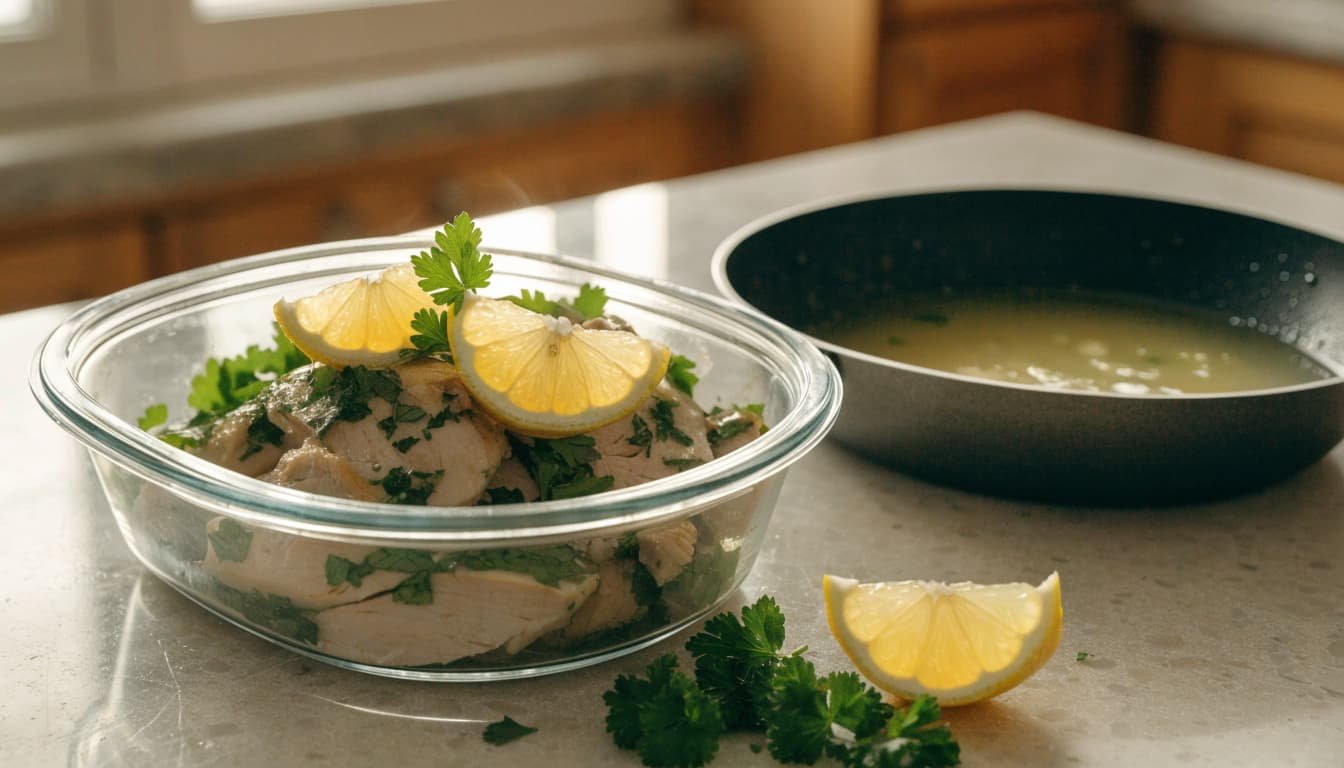
Reheat only the portion you need on the stove, in the oven, or in the microwave. Add a small splash of broth or water, then cover the chicken as it warms to help it stay moist. In the microwave, rotate the dish partway through and let it stand briefly before checking for cold spots. Use a food thermometer to confirm the chicken reaches 165°F throughout. The USDA’s leftover food safety guidance recommends reheating leftovers to this temperature and advises against using a slow cooker to reheat them.
Conclusion
Lemon Herb Chicken Breast for a Simple Healthy Dinner keeps the evening manageable with a bright, herb-filled marinade and a thermometer check for dependable results. Choose the skillet or oven based on the time you have, then serve the chicken with vegetables and a grain or potato that fits your meal.
Refrigerate any extra chicken promptly and use it in another meal within three to four days. A little planning makes this simple dinner easy to enjoy again.

- Christmas Cookie Ideas for Every Holiday Baker - November 9, 2026
- Christmas Cocktails: Party Drinks, Cozy Sips, and Mocktails - November 9, 2026
- 20 Christmas Appetizer Ideas for Every Holiday Spread - November 9, 2026